Vocabulary Lesson

French City Life Vocabulary

In this short lesson, you'll master essential city life vocabulary in French. After learning the words, use the flashcards or quiz to reinforce your knowledge.
A1-C1 Audio Included Quiz Flashcards
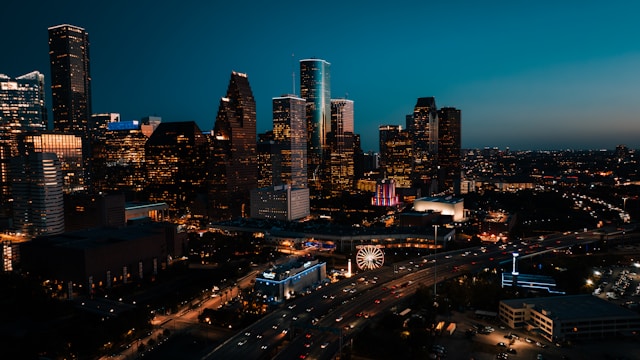
A photo of city life

French City Life Vocabulary

Start with the most common words, then expand your knowledge with intermediate and advanced vocabulary.

Beginner (A1)

  • apartment l'appartement
  • avenue l'avenue
  • hospital l'hôpital
  • school l'école
  • bank la banque
  • bakery la boulangerie
  • house la maison
  • pharmacy la pharmacie
  • square la place
  • post office la poste
  • street la rue
  • office le bureau
  • bus le bus
  • café le café
  • downtown le centre-ville
  • cinema le cinéma
  • shop le magasin
  • market le marché
  • museum le musée
  • subway le métro
  • park le parc
  • restaurant le restaurant
  • supermarket le supermarché
  • taxi le taxi
  • tourist le touriste/la touriste

Elementary (A2)

  • poster l'affiche
  • ambulance l'ambulance
  • highway l'autoroute
  • building l'immeuble
  • university l'université
  • factory l'usine
  • library la bibliothèque
  • store la boutique
  • traffic la circulation
  • fountain la fontaine
  • crowd la foule
  • town hall la mairie
  • trash can la poubelle
  • jail la prison
  • advertisement la publicité
  • statue la statue
  • bench le banc
  • boulevard le boulevard
  • mall le centre commercial
  • construction site le chantier
  • garage le garage
  • kiosk le kiosque
  • monument le monument
  • parking lot le parking
  • zebra crossing le passage piéton
  • pedestrian le piéton/la piétonne
  • city map le plan de la ville
  • bridge le pont
  • neighborhood le quartier
  • roundabout le rond-point
  • sports stadium le stade
  • theater le théâtre
  • tram le tramway
  • sidewalk le trottoir
  • tunnel le tunnel
  • public toilet les toilettes publiques
  • public transport les transports en commun

Intermediate & Advanced (B1-C1)

  • district le quartier
  • street performer l'artiste de rue
  • traffic jam l'embouteillage
  • public square l'esplanade
  • suburb la banlieue
  • dumpster la benne à ordures
  • nightclub la boîte de nuit
  • telephone booth la cabine téléphonique
  • fire station la caserne de pompiers
  • power line la ligne électrique
  • bicycle path la piste cyclable
  • pollution la pollution
  • outskirts la périphérie
  • alley la ruelle
  • concert hall la salle de concert
  • pedestrian zone la zone piétonne
  • canal le canal
  • police station le commissariat
  • graffiti le graffiti
  • skyscraper le gratte-ciel
  • street vendor le marchand ambulant/la marchande ambulante
  • newsstand le kiosque à journaux
  • courthouse le palais de justice
  • billboard le panneau publicitaire
  • crosswalk le passage piéton
  • landmark le point de repère
  • resident le résident/la résidente
  • streetlight le réverbère
  • sewer le égout
  • scaffold l'échafaudage
  • fire hydrant la bouche d'incendie
  • manhole la bouche d'égout
  • metropolis la métropole
  • skyline la ligne d'horizon
  • commuter le navetteur / la navetteuse

Practice What You've Learned

Review your French city life vocabulary and test your knowledge with interactive practice.

Ready to take the quiz?

Put your new city life vocabulary into practice and see how many words you can remember.

Take the quiz

Practice with flashcards

Review French city life vocabulary and strengthen your memory with interactive flashcards.

Open flashcards

Example Sentences

In proper context. With highlighted verbs and adjectives.

Beginner & Elementary (A1-A2)

Basic verbs and adjectives used to describe daily life and surroundings in a French city.

  • Le bus traverse la grande avenue. The bus crosses the wide avenue.
  • Nous habitons près du parc. We live near the park.
  • Je cherche la boulangerie du quartier. I am looking for the neighborhood bakery.
  • Ils marchent sur le trottoir. They are walking on the sidewalk.
  • Vous attendez le métro devant la station. You are waiting for the subway in front of the station.
  • Le grand musée est ouvert aujourd'hui. The big museum is open today.
  • Cette rue étroite est très calme le soir. This narrow street is very quiet in the evening.
  • Le nouveau restaurant est populaire. The new restaurant is popular.
  • La place centrale est toujours animée. The central square is always lively.
  • Le bus du matin est plein. The morning bus is full.

Intermediate & Advanced (B1-C1)

More complex sentence structures discussing urban infrastructure, commuting, and city developments.

  • Les automobilistes évitent le centre-ville pendant les heures de pointe. Drivers avoid downtown during rush hour.
  • La mairie réhabilite cet ancien quartier industriel. City hall is renovating this old industrial neighborhood.
  • De nombreux piétons empruntent cette passerelle moderne. Many pedestrians use this modern footbridge.
  • Le tramway dessert les banlieues éloignées. The tram serves distant suburbs.
  • Les résidents protestent contre le bruit de la circulation. Residents are protesting against the noise of traffic.
  • Cette zone piétonne est particulièrement agréable en été. This pedestrian zone is particularly pleasant in summer.
  • Le réseau de transports en commun est très efficace. The public transportation network is very efficient.
  • La circulation est devenue dense aux abords du rond-point. Traffic has become dense around the roundabout.
  • Les gratte-ciel modernes offrent un panorama spectaculaire. Modern skyscrapers offer a spectacular skyline view.
  • Ce boulevard historique est particulièrement bruyant. This historic boulevard is particularly noisy.

Frequently Asked Questions

Master key language skills and cultural insights for navigating urban life in French-speaking areas.

Asking for directions is essential when navigating a French city. Here are common expressions to locate key places:

  • Où se trouve... ? — Where is...?
  • Pour aller à la gare, s'il vous plaît ? — How do I get to the train station, please?
  • Est-ce que c'est loin d'ici ? — Is it far from here?
  • Prenez la première rue à droite. — Take the first street on the right.

To describe the atmosphere and layout of a city or neighborhood, French speakers often use specific adjectives:

  • Animé(e) — Lively / vibrant
  • Bruyant(e) — Noisy
  • Calme / Paisible — Quiet / peaceful
  • Bondé(e) — Crowded / packed
  • Piéton / Piétonne — Pedestrianised (e.g., une zone piétonne)

When moving through urban transit systems or walking, the following action verbs are frequently used:

  • Traverser — To cross (e.g., traverser la rue)
  • Emprunter — To take / use a route or path (e.g., emprunter le boulevard)
  • Prendre — To catch or take public transit (e.g., prendre le métro)
  • S'arrêter — To stop (e.g., le bus s'arrête ici)
  • Flâner — To stroll or wander aimlessly

Understanding urban geography terminology helps clarify location context in conversation:

  • La ville — The city or town as a whole.
  • Le centre-ville — The downtown or city center core area.
  • La banlieue — The suburbs or outer residential areas surrounding a city.
  • La périphérie — The outer edge or outskirts of an urban zone.

French includes several lively expressions connected to commuting and urban routines:

  • Métro, boulot, dodo — The daily grind (literally: subway, work, sleep).
  • Un coup de claxon — A honk of a car horn.
  • Faire du lèche-vitrine — To go window shopping.
  • Être coincé dans les bouchons — To be stuck in traffic.

Explore All French Lessons

Browse all French vocabulary lessons, quizzes, grammar guides, and learning resources.

Browse All Lessons

Photo by Jeswin Thomas on Unsplash