Vocabulary Lesson

French Nature Vocabulary

In this short lesson, you'll master essential nature vocabulary in French. After learning the words, use the flashcards or quiz to reinforce your knowledge.
A1-C1 Audio Included Quiz Flashcards
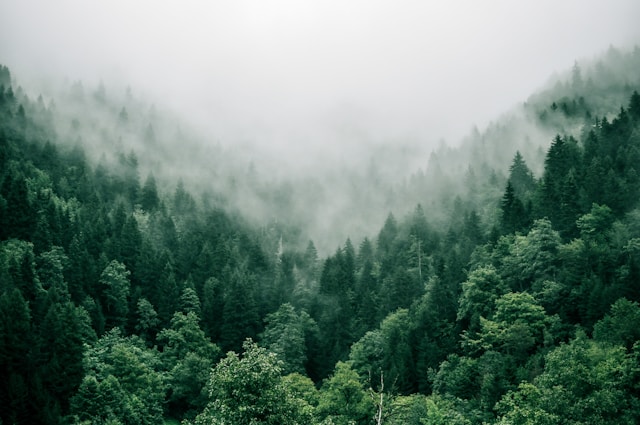
A photo of nature}}

French Nature Vocabulary

Start with the most common words, then expand your knowledge with intermediate and advanced vocabulary.

Beginner (A1)

  • tree l'arbre
  • grass l'herbe
  • ocean l'océan
  • star l'étoile
  • island l'île
  • branch la branche
  • hill la colline
  • coast la côte
  • leaf la feuille
  • flower la fleur
  • forest la forêt
  • moon la lune
  • sea la mer
  • mountain la montagne
  • snow la neige
  • stone la pierre
  • beach la plage
  • plant la plante
  • rain la pluie
  • river la rivière
  • soil la terre
  • valley la vallée
  • field (crop) le champ
  • sky le ciel
  • lake le lac
  • cloud le nuage
  • rock le rocher
  • sand le sable
  • sun le soleil
  • weather le temps
  • wind le vent

Elementary (A2)

  • spider l'araignée
  • rainbow l'arc-en-ciel
  • horizon l'horizon
  • insect l'insecte
  • lightning l'éclair
  • pond l'étang
  • bay la baie
  • mud la boue
  • log la bûche
  • waterfall la cascade
  • dune la dune
  • cliff la falaise
  • seed la graine
  • cave la grotte
  • hedge la haie
  • jungle la jungle
  • weed la mauvaise herbe
  • slope la pente
  • dust la poussière
  • root la racine
  • spring (water source) la source
  • storm la tempête
  • wave la vague
  • fog le brouillard
  • bush le buisson
  • canal le canal
  • climate le climat
  • desert le désert
  • ditch le fossé
  • ivy le lierre
  • peak le pic
  • meadow le pré
  • pasture le pâturage
  • creek le ruisseau
  • path le sentier
  • thunder le tonnerre
  • trunk le tronc
  • orchard le verger
  • volcano le volcan

Intermediate & Advanced (B1-C1)

  • deciduous tree l'arbre à feuilles caduques
  • shrub l'arbuste
  • clay l'argile
  • avalanche l'avalanche
  • iceberg l'iceberg
  • flood l'inondation
  • bark l'écorce
  • thorn l'épine
  • erosion l'érosion
  • mist la brume
  • quarry la carrière
  • clearing la clairière
  • ridge la crête
  • blossom la floraison
  • fern la fougère
  • gorge la gorge
  • heath la lande
  • tide la marée
  • moss la mousse
  • prairie la prairie
  • peninsula la péninsule
  • savanna la savane
  • stem la tige
  • tundra la toundra
  • boulder le bloc
  • timber le bois (de construction)
  • bud le bourgeon
  • canyon le canyon
  • cape le cap
  • conifer le conifère
  • coral le corail
  • current le courant
  • hollow le creux
  • fjord le fjord
  • fossil le fossile
  • thicket le fourré
  • geyser le geyser
  • glacier le glacier
  • gulf le golfe
  • sinkhole le gouffre
  • gravel le gravier
  • lagoon le lagon
  • swamp le marais
  • mineral le minéral
  • plateau le plateau
  • pollen le pollen
  • petal le pétale
  • ravine le ravin
  • brook le ruisselet
  • reef le récif
  • summit le sommet
  • underbrush le sous-bois
  • sediment le sédiment
  • earthquake le tremblement de terre
  • vineyard le vignoble
  • rapids les rapides
  • archipelago l'archipel
  • ecosystem l'écosystème
  • biodiversity la biodiversité
  • canopy la canopée
  • moraine la moraine
  • pollination la pollinisation
  • spore la spore
  • steppe la steppe
  • sap la sève
  • taiga la taïga
  • peat la tourbe
  • peatland la tourbière
  • canopy (forest cover) la voûte forestière
  • wetland la zone humide
  • foothill le contrefort
  • delta le delta
  • lichen le lichen
  • ore le minerai

Practice What You've Learned

Review your French nature vocabulary and test your knowledge with interactive practice.

Ready to take the quiz?

Put your new nature vocabulary into practice and see how many words you can remember.

Take the quiz

Practice with flashcards

Review French nature vocabulary and strengthen your memory with interactive flashcards.

Open flashcards

Example Sentences

In proper context. With highlighted verbs and adjectives.

Beginner & Elementary (A1-A2)

Essential sentences featuring foundational verbs and adjectives used to describe nature.

  • Le petit arbre pousse dans le jardin. The small tree grows in the garden.
  • La pluie tombe sur la colline. The rain falls on the hill.
  • Le soleil brille fort au-dessus du lac. The sun shines brightly above the lake.
  • Nous marchons au bord de la mer. We walk by the seaside.
  • Les oiseaux volent vers la forêt. The birds fly toward the forest.
  • Le lac est très calme aujourd'hui. The lake is very calm today.
  • L'herbe de la vallée est verte. The grass in the valley is green.
  • La montagne est haute et magnifique. The mountain is tall and magnificent.
  • Le sable de la plage est chaud. The sand on the beach is warm.
  • La forêt est sombre le soir. The forest is dark in the evening.

Intermediate & Advanced (B1-C1)

Complex sentences describing natural environments, phenomena, and terrain features.

  • L'eau du ruisseau serpente à travers la clairière. The stream's water winds through the clearing.
  • L'érosion transforme rapidement le paysage côtier. Erosion rapidly transforms the coastal landscape.
  • Les vagues déferlent avec force contre la falaise. The waves crash forcefully against the cliff.
  • Le épais brouillard masque le sommet du pic. The thick fog masks the peak's summit.
  • Les fleurs du verger fleurissent dès le printemps. The orchard flowers bloom starting in spring.
  • La voûte forestière demeure particulièrement dense. The forest canopy remains particularly dense.
  • Les rochers du sommet sont extrêmement glissants. The rocks at the summit are extremely slippery.
  • Le climat de ce désert est extrêmement aride. The climate of this desert is extremely arid.
  • Ce glacier majestueux paraît totalement immobile. This majestic glacier appears totally motionless.
  • Le sol de la zone humide reste très humide. The soil of the wetland remains very humid.

Frequently Asked Questions

Frequently asked questions about French nature and geography vocabulary.

French makes a strict geographical distinction between these two words for rivers, whereas English uses 'river' for both:

  • Un fleuve: A river that flows directly into an ocean or a sea (e.g., La Seine, La Loire, Le Rhône).
  • Une rivière: A river or tributary that flows into another river rather than into the sea (e.g., La Marne).

When talking about nature and weather, French uses specific impersonal or active verb structures:

  • Impersonal expressions: Il pleut (It is raining), Il neige (It is snowing), Il fait beau/frais (It is nice/cool weather).
  • Natural actions: Le vent souffle (The wind blows), Le soleil se lève / se couche (The sun rises / sets), L'eau coule (Water flows).

To paint vivid pictures of nature in French, use these common descriptors:

  • Terrain: escarpé (steep/rugged), vallonné (rolling/hilly), plat (flat).
  • Vegetation: luxuriant (lush), aride (arid/dry), boisé (wooded).
  • Water and Sky: cristallin (crystal-clear), agité (rough/choppy), dégagé (clear sky).

Depending on the intensity and setting, French has different expressions for spending time outdoors:

  • Faire une promenade: A casual walk, usually short and easy.
  • Faire une randonnée: A proper hike in the mountains, forest, or countryside.
  • S'aérer / Prendre l'air: To go outside to get fresh air.

When describing location relative to nature, choosing the correct preposition is important:

  • En: Used with elevated regions or mountains: en montagne (in the mountains).
  • À la: Used with coasts and countryside: à la mer (at the seaside), à la campagne (in the countryside).
  • Dans: Used when enclosed by nature: dans la forêt (in the forest), dans la vallée (in the valley).

Explore All French Lessons

Browse all French vocabulary lessons, quizzes, grammar guides, and learning resources.

Browse All Lessons

Photo by Marita Kavelashvili on Unsplash