Vocabulary Lesson

German City Life Vocabulary

In this short lesson, you'll master essential city life vocabulary in German. After learning the words, use the flashcards or quiz to reinforce your knowledge.
A1-C1 Audio Included Quiz Flashcards
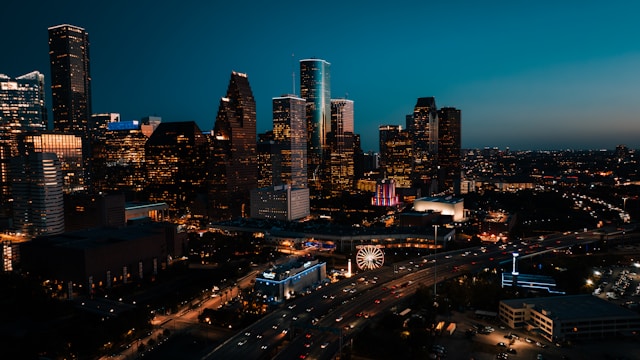
A photo of city life

German City Life Vocabulary

Start with the most common words, then expand your knowledge with intermediate and advanced vocabulary.

Beginner (A1)

  • car das Auto
  • office das Büro
  • café das Café
  • shop das Geschäft
  • house das Haus
  • hotel das Hotel
  • cinema das Kino
  • hospital das Krankenhaus
  • museum das Museum
  • restaurant das Restaurant
  • taxi das Taxi
  • theater das Theater
  • ticket das Ticket
  • station der Bahnhof
  • bus der Bus
  • kindergarten der Kindergarten
  • market der Markt
  • park der Park
  • square der Platz
  • supermarket der Supermarkt
  • tourist der Tourist/die Touristin
  • train der Zug
  • traffic light die Ampel
  • pharmacy die Apotheke
  • bakery die Bäckerei
  • church die Kirche
  • post office die Post
  • school die Schule
  • street die Straße
  • underground die U-Bahn
  • apartment die Wohnung

Elementary (A2)

  • gym das Fitnessstudio
  • building das Gebäude
  • graffiti das Graffiti
  • hostel das Hostel
  • motorcycle das Motorrad
  • town hall das Rathaus
  • neighborhood das Viertel
  • waste der Abfall
  • resident der Bewohner/die Bewohnerin
  • fountain der Brunnen
  • pedestrian der Fußgänger/die Fußgängerin
  • ATM der Geldautomat
  • noise der Lärm
  • garbage can der Mülleimer
  • parking lot der Parkplatz
  • cyclist der Radfahrer/die Radfahrerin
  • bicycle lane der Radweg
  • scooter der Roller
  • playground der Spielplatz
  • tunnel der Tunnel
  • traffic der Verkehr
  • crosswalk der Zebrastreifen
  • highway die Autobahn
  • bench die Bank
  • bar die Bar
  • construction site die Baustelle
  • library die Bibliothek
  • bridge die Brücke
  • factory die Fabrik
  • stop die Haltestelle
  • butcher shop die Metzgerei
  • mosque die Moschee
  • queue die Schlange
  • tram die Straßenbahn
  • university die Universität

Intermediate & Advanced (B1-C1)

  • monument das Denkmal
  • mall das Einkaufszentrum
  • prison das Gefängnis
  • landmark das Wahrzeichen
  • sidewalk der Bürgersteig
  • fare der Fahrpreis
  • cemetery der Friedhof
  • roundabout der Kreisverkehr
  • commuter der Pendler/die Pendlerin
  • guide der Stadtführer/die Stadtführerin
  • district der Stadtteil
  • temple der Tempel
  • suburb der Vorort
  • public transport der öffentliche Verkehr
  • bookstore die Buchhandlung
  • fire station die Feuerwache
  • pedestrian zone die Fußgängerzone
  • alley die Gasse
  • crowd die Menschenmenge
  • police station die Polizeiwache
  • skyline die Skyline
  • lane die Spur
  • statue die Statue
  • streetlight die Straßenlaterne
  • courthouse das Gerichtsgebäude
  • skyscraper der Wolkenkratzer
  • pollution die Verschmutzung
  • billboard die Werbetafel

Practice What You've Learned

Review your German city life vocabulary and test your knowledge with interactive practice.

Ready to take the quiz?

Put your new city life vocabulary into practice and see how many words you can remember.

Take the quiz

Practice with flashcards

Review German city life vocabulary and strengthen your memory with interactive flashcards.

Open flashcards

Example Sentences

In proper context. With highlighted verbs and adjectives.

Beginner & Elementary (A1-A2)

Essential verbs and adjectives for everyday situations in the city.

  • Der Bus hält an der nächsten Haltestelle. The bus stops at the next stop.
  • Ein rotes Auto parkt vor dem Haus. A red car is parked in front of the house.
  • Ich kaufe frisches Brot in der Bäckerei. I am buying fresh bread at the bakery.
  • Viele Menschen warten am Bahnhof. Many people are waiting at the station.
  • Wir fahren mit der U-Bahn ins Zentrum. We are taking the underground to the centre.
  • Die Straße vor dem Hotel ist sehr laut. The street in front of the hotel is very noisy.
  • Der Park im Stadtzentrum ist sehr sauber. The park in the city center is very clean.
  • Die Kirche am Platz ist wunderschön und alt. The church on the square is beautiful and old.
  • Der Supermarkt ist am Samstag immer voll. The supermarket is always full on Saturday.
  • Die Apotheke liegt ganz nah am Bahnhof. The pharmacy is located very close to the station.

Intermediate & Advanced (B1-C1)

More complex sentence structures for discussing urban development, traffic, and public life.

  • Die Fußgänger überqueren die Straße am Zebrastreifen. The pedestrians cross the street at the crosswalk.
  • Der Ausbau des Radwegs verringert den Verkehr in der Innenstadt. The expansion of the cycle path reduces traffic in the city center.
  • Die Stadtverwaltung renoviert das alte Gerichtsgebäude. The city administration is renovating the old courthouse.
  • Die neue Straßenbahn soll das Zentrum vom Lärm entlasten. The new tram is supposed to relieve the centre of noise.
  • Moderne Wolkenkratzer prägen die Skyline dieser Metropole. Modern skyscrapers shape the skyline of this metropolis.
  • Die Fußgängerzone ist am Wochenende besonders belebt. The pedestrian zone is particularly lively on the weekend.
  • Der Verkehr im Tunnel ist besonders dicht. Traffic in the tunnel is particularly dense.
  • Das Rathaus ist ein wichtiges historisches Gebäude. The town hall is an important historical building.
  • In der Altstadt gibt es viele enge Gassen. In the old town there are many narrow alleys.
  • Der Bahnhof wurde vollständig barrierefrei umgebaut. The train station was renovated to be fully accessible.

Frequently Asked Questions

Frequently asked questions about German city vocabulary, directions, and urban navigation.

When navigating a city, these key phrases will help you ask local residents for help getting around:

  • Entschuldigung, wo ist...? — Excuse me, where is...?
  • Wie komme ich zum Bahnhof / zur Apotheke? — How do I get to the station / pharmacy?
  • Ist das weit von hier? — Is that far from here?
  • Gehen Sie geradeaus und dann links/rechts. — Go straight ahead and then left/right.

Getting around in German urban transit relies on a few core movement verbs:

  • einsteigen — to get on/board (a bus, train, or tram)
  • aussteigen — to get off/alight
  • umsteigen — to transfer/change trains or buses
  • abfahren / ankommen — to depart / to arrive

German uses several words to break down a city into specific sections:

  • die Altstadt — old town / historic city center
  • das Zentrum / die Innenstadt — city centre / downtown area
  • der Stadtteil / das Viertel — district or neighborhood (often called Kiez in Berlin)
  • der Vorort — suburb

To paint a picture of city life, you can use these expressive adjectives:

  • belebt — lively / bustling
  • überfüllt — overcrowded
  • laut / ruhig — noisy / quiet
  • mobiil / gut angebunden — accessible / well connected by public transit

Yes! Depending on whether you are in Germany, Austria, or Switzerland, everyday urban terms can vary:

  • Sidewalk: Bürgersteig or Gehweg in Germany, Gehsteig in Austria, and Trottoir in Switzerland.
  • Hospital: Krankenhaus across Germany, but frequently Spital in Austria and Switzerland.
  • Bicycle: Fahrrad in Germany and Austria, but almost exclusively Velo in Switzerland.

Explore All German Lessons

Browse all German vocabulary lessons, quizzes, grammar guides, and learning resources.

Browse All Lessons

Photo by Jeswin Thomas on Unsplash