Vocabulary Lesson

German Colors Vocabulary

In this short lesson, you'll master essential colors vocabulary in German. After learning the words, use the flashcards or quiz to reinforce your knowledge.
A1-C1 Audio Included Quiz Flashcards
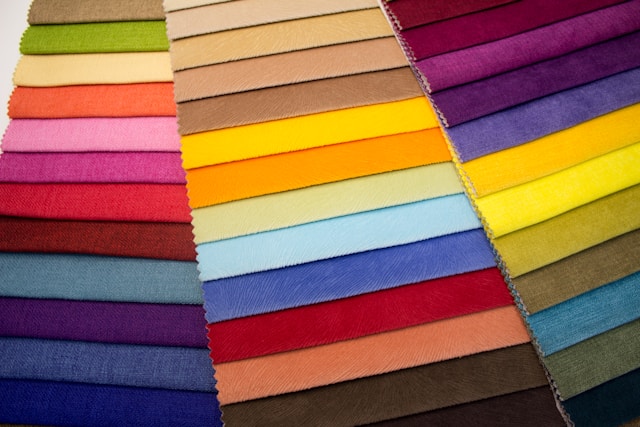
A photo of colors

German Colors Vocabulary

Start with the most common words, then expand your knowledge with intermediate and advanced vocabulary.

Beginner (A1)

  • black schwarz
  • blue blau
  • brown braun
  • gray grau
  • green grün
  • orange orange
  • pink rosa
  • purple violett
  • red rot
  • white weiß
  • yellow gelb

Elementary (A2)

  • beige beige
  • cyan cyan
  • dark blue dunkelblau
  • dark green dunkelgrün
  • gold gold
  • light blue hellblau
  • silver silber
  • turquoise türkis

Intermediate & Advanced (B1-C1)

  • chartreuse chartreuse
  • fuchsia fuchsia
  • lavender lavendel
  • lime green limettengrün
  • maroon bordeauxrot
  • mauve mauve
  • navy blue marineblau
  • olive green olivgrün
  • sky blue himmelblau
  • slate gray schiefergrau
  • tan hellbraun
  • chocolate brown schokoladenbraun
  • emerald smaragd
  • indigo indigo
  • indigo blue indigoblau
  • ivory elfenbein
  • khaki khaki
  • mint green mintgrün
  • mustard yellow senfgelb
  • off‑white wollweiß
  • periwinkle lavendelblau
  • rust rostbraun
  • salmon pink lachsrosa
  • slate schiefer
  • steel blue stahlblau
  • mother‑of‑pearl perlmutt
  • sapphire saphir

Practice What You've Learned

Review your German colors vocabulary and test your knowledge with interactive practice.

Ready to take the quiz?

Put your new colors vocabulary into practice and see how many words you can remember.

Take the quiz

Practice with flashcards

Review German colors vocabulary and strengthen your memory with interactive flashcards.

Open flashcards

Example Sentences

In proper context. With highlighted verbs and adjectives.

Beginner & Elementary (A1-A2)

Basic sentences describing everyday objects and simple actions with colors.

  • Ich trage heute eine schwarze Jacke. I am wearing a black jacket today.
  • Das Kind malt eine rote Sonne. The child is painting a red sun.
  • Wir kaufen ein blaues Fahrrad. We are buying a blue bicycle.
  • Er sieht die grünen Bäume im Garten. He sees the green trees in the garden.
  • Der Himmel wird langsam dunkel. The sky is slowly getting dark.
  • Das Auto ist grau und sehr alt. The car is gray and very old.
  • Ihre neue Tasche ist hellblau. Her new bag is light blue.
  • Die Zitrone ist gelb und schmeckt sauer. The lemon is yellow and tastes sour.
  • Das Sofa im Wohnzimmer ist braun. The sofa in the living room is brown.
  • Mein Hemd ist vollkommen weiß. My shirt is completely white.

Intermediate & Advanced (B1-C1)

More complex sentence structures discussing shades, combinations, and artistic descriptions.

  • Der Künstler mischte verschiedene Blautöne für das Bild. The artist mixed different shades of blue for the painting.
  • Der Stoff verblasst stark bei direkter Sonne. The fabric fades significantly in direct sunlight.
  • Sie bevorzugt im Herbst eher dezentere Erdtöne. She prefers more subtle earth tones in autumn.
  • Die Abendsonne färbt den Himmel dunkelrot. The evening sun turns the sky dark red.
  • Das glänzende Material reflektiert das Licht elegant. The shiny material reflects the light elegantly.
  • Die Wände sind in einem beruhigenden olivgrün gestrichen. The walls are painted in a calming olive green.
  • Sie wählte ein Kleid in edlem marineblau. She chose a dress in elegant navy blue.
  • Die alten Fliesen wirken leicht mintgrün. The old tiles look slightly mint green.
  • Das Gebäude besitzt eine schiefergrau schimmernde Fassade. The building has a facade shimmering in slate gray.
  • Seine Jacke hat eine auffällige senfgelb getönte Farbe. His jacket has a strikingly mustard yellow color.

Frequently Asked Questions

Frequently asked questions about German color grammar, declensions, and idioms.

When colors act as attributive adjectives before a noun, they take standard adjective endings based on gender, case, and article type:

  • Standard colors declension: ein roter Apfel (a red apple - masculine nominative), die blaue Tasche (the blue bag - feminine nominative).
  • Compound colors: Colors joined into one word decline as single units: ein dunkelblaues Hemd (a dark blue shirt).
  • Colors ending in vowel/foreign words: Foreign loanwords like rosa, orange, or lila often remain undeclined in spoken German (e.g., ein rosa Kleid), though informal inflections occasionally appear.

Certain color words imported from other languages or named after objects do not add standard adjective endings:

  • Foreign loanwords: rosa (pink), lila (purple), beige (beige), and khaki (khaki).
  • Usage pattern: Instead of adding endings, speakers use them bare: ein rosa Hemd instead of ein rosanes Hemd.
  • Formal alternative: To make them sound fully formal and declinable, combine them with -farben: ein rosafarbenes Hemd or ein beigefarbenes Kleid.

Modifying colors in German is simple because shade descriptors prefix directly to the base color word:

  • Light shades: Prefix with hell- (e.g., hellblau = light blue, hellgrün = light green).
  • Dark shades: Prefix with dunkel- (e.g., dunkelrot = dark red, dunkelbraun = dark brown).
  • Specific hues: Combine descriptive items directly: senfgelb (mustard yellow), smaragdgrün (emerald green), himmelblau (sky blue).

German features several colourful idioms that do not translate literally into English:

  • Blau sein: To be drunk (literally: to be blue).
  • Blau machen: To skip work or school / play truant.
  • Grün hinter den Ohren sein: To be green behind the ears (inexperienced/naive).
  • Schwarz sehen: To see black (to be pessimistic about the future).
  • Das Gelbe vom Ei: The yellow of the egg (the absolute best part or ideal solution).

Capitalization depends strictly on whether the color word functions as a noun or an adjective:

  • Adjectives (lowercase): Used descriptively: Das Buch ist rot. / Ich habe ein rotes Buch.
  • Nouns (capitalized): Used with prepositions or articles: Das Grün der Bäume (the green of the trees) or In Blau gekleidet (dressed in blue).
  • Fixed phrases with prepositions: bei Grün über die Ampel gehen (to cross at a green light).

Explore All German Lessons

Browse all German vocabulary lessons, quizzes, grammar guides, and learning resources.

Browse All Lessons

Photo by Ekaterina Grosheva on Unsplash