Vocabulary Lesson

German Family Vocabulary

In this short lesson, you'll master essential family vocabulary in German. After learning the words, use the flashcards or quiz to reinforce your knowledge.
A1-C1 Audio Included Quiz Flashcards
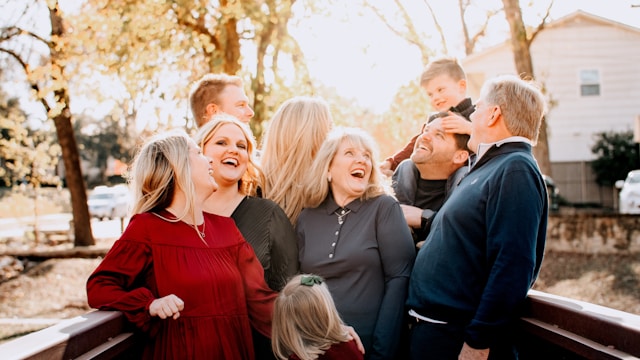
A photo of family

German Family Vocabulary

Start with the most common words, then expand your knowledge with intermediate and advanced vocabulary.

Beginner (A1)

  • baby das Baby
  • child das Kind
  • brother der Bruder
  • sister die Schwester
  • father der Vater
  • mother die Mutter
  • husband der Ehemann
  • grandfather der Großvater
  • grandmother die Großmutter
  • uncle der Onkel
  • son der Sohn
  • daughter die Tochter
  • wife die Ehefrau
  • family die Familie
  • aunt die Tante

Elementary (A2)

  • family member das Familienmitglied
  • cousin der Cousin/die Cousine
  • parent der Elternteil
  • grandson der Enkel
  • nephew der Neffe
  • partner der Partner/die Partnerin
  • single person der Single/die Single
  • stepfather der Stiefvater
  • stepmother die Stiefmutter
  • relative der Verwandte/die Verwandte
  • twin der Zwilling/die Zwillinge
  • marriage die Ehe
  • granddaughter die Enkelin
  • niece die Nichte

Intermediate & Advanced (B1-C1)

  • godchild das Patenkind
  • foster child das Pflegekind
  • orphan das Waisenkind
  • spouse der Ehepartner/die Ehepartnerin
  • half-brother der Halbbruder
  • godfather der Pate
  • godparent der Pate/die Patin
  • godmother die Patin
  • brother-in-law der Schwager
  • son-in-law der Schwiegersohn
  • stepbrother der Stiefbruder
  • stepson der Stiefsohn
  • great-grandfather der Urgroßvater
  • fiancé der Verlobte/die Verlobte
  • biological father der leibliche Vater
  • biological mother die leibliche Mutter
  • generation die Generation
  • extended family die Großfamilie
  • half-sister die Halbschwester
  • divorce die Scheidung
  • daughter-in-law die Schwiegertochter
  • sister-in-law die Schwägerin
  • stepsister die Stiefschwester
  • stepdaughter die Stieftochter
  • separation die Trennung
  • great-grandmother die Urgroßmutter
  • adoptive parent der Adoptivelternteil
  • adoptive father der Adoptivvater
  • descendant der Nachkomme/die Nachkommin
  • godson der Patensohn
  • family tree der Stammbaum
  • great-grandson der Urenkel
  • ancestor der Vorfahre/die Vorfahrin
  • widower der Witwer
  • adoption die Adoption
  • adoptive mother die Adoptivmutter
  • nuclear family die Kernfamilie
  • foster family die Pflegefamilie
  • kinship die Verwandtschaft
  • widow die Witwe
  • lineage die Abstammung

Practice What You've Learned

Review your German family vocabulary and test your knowledge with interactive practice.

Ready to take the quiz?

Put your new family vocabulary into practice and see how many words you can remember.

Take the quiz

Practice with flashcards

Review German family vocabulary and strengthen your memory with interactive flashcards.

Open flashcards

Example Sentences

In proper context. With highlighted verbs and adjectives.

Beginner & Elementary (A1-A2)

Learn everyday German vocabulary about family with clear examples.

  • Ich besuche am Wochenende meine Großmutter. I visit my grandmother on the weekend.
  • Mein Bruder wohnt noch bei unseren Eltern. My brother still lives with our parents.
  • Meine Tante heiratet nächsten Monat. My aunt is getting married next month.
  • Wir haben eine sehr große Familie. We have a very big family.
  • Der Sohn hilft seinem Vater im Garten. The son helps his father in the garden.
  • Das Baby ist noch sehr jung und schläft viel. The baby is still very young and sleeps a lot.
  • Seine neue Schwägerin ist überaus nett. His new sister-in-law is extremely nice.
  • Mein Großvater ist schon sehr alt. My grandfather is already very old.
  • Die kleine Familie ist sehr glücklich. The small family is very happy.
  • Die Mutter ist stolz auf ihre Tochter. The mother is proud of her daughter.

Intermediate & Advanced (B1-C1)

Master advanced family vocabulary and complex expressions.

  • Die Verwandten pflegen die alte Großmutter gemeinsam zu Hause. The relatives care for the elderly grandmother together at home.
  • Das Ehepaar möchte ein Pflegekind adoptieren. The married couple wants to adopt a foster child.
  • Genforscher untersuchen die Abstammung dieser adligen Familie. Genetic researchers are investigating the lineage of this noble family.
  • Nach der Trennung wollte der Witwer seine Trauer überwinden. After the separation, the widower wanted to overcome his grief.
  • Die Nachkommen erben das Haus ihrer Vorfahren. The descendants inherit the house of their ancestors.
  • Seine leibliche Mutter konnte ihn erst spät wiedersehen. His biological mother was only able to see him again later.
  • Ein alleinerziehender Elternteil trägt viel Verantwortung. A single parent carries a lot of responsibility.
  • Wir sind über drei Ecken weitläufig miteinander verwandt. We are distantly related to each other.
  • In der Vergangenheit war eine kinderreiche Großfamilie sehr häufig. In the past, a large family with many children was very common.
  • Das Ehepaar entschied sich für ein kinderloses Leben. The married couple chose a childless life.

Frequently Asked Questions

Frequently asked questions about German family terms and usage.

In informal family settings, standard terms like die Mutter or der Großvater are usually replaced with affectionate nicknames:

  • Mama / Mutti — Mom / Mommy
  • Papa / Vati — Dad / Daddy
  • Oma / Opi — Grandma / Grandpa
  • Opa — Grandpa
  • Geschwister — Siblings (collective noun for brothers and sisters)

Both terms refer to relatives or family, but they carry slightly different legal and social nuances:

  • Die Verwandtschaft refers broadly to extended family or kinship ties by blood or marriage (e.g., cousins, aunts, uncles).
  • Die Angehörigen is often used in official, legal, or medical contexts to refer to immediate relatives or next of kin.

German uses specific prefixes and loanwords to describe modern family structures:

  • Stief- (e.g., Stiefmutter, Stiefbruder) is used for step-relatives resulting from remarriage.
  • Halb- (e.g., Halbschwester, Halbbruder) indicates half-siblings who share one biological parent.
  • Die Patchwork-Familie is a very common modern term borrowed from English to describe blended families.

In-law terms in German generally build upon the root word Schwieger- or specific independent terms:

  • der Schwiegervater / die Schwiegermutter — Father-in-law / Mother-in-law
  • der Schwiegersohn / die Schwiegertochter — Son-in-law / Daughter-in-law
  • der Schwager / die Schwägerin — Brother-in-law / Sister-in-law
  • die Schwiegereltern — Parents-in-law (plural)

When talking about your family members, possessive pronouns must match the gender and grammatical case of the noun:

  • mein Vater (masculine nominative) — my father
  • meine Mutter (feminine nominative) — my mother
  • mein Kind (neuter nominative) — my child
  • meine Eltern (plural nominative) — my parents
  • When using accusative (direct object): Ich besuche meinen Vater und meine Mutter.

Explore All German Lessons

Browse all German vocabulary lessons, quizzes, grammar guides, and learning resources.

Browse All Lessons

Photo by Cameorn Steele on Unsplash