Vocabulary Lesson

German Restaurant Vocabulary

In this short lesson, you'll master essential restaurant vocabulary in German. After learning the words, use the flashcards or quiz to reinforce your knowledge.
A1-C1 Audio Included Quiz Flashcards
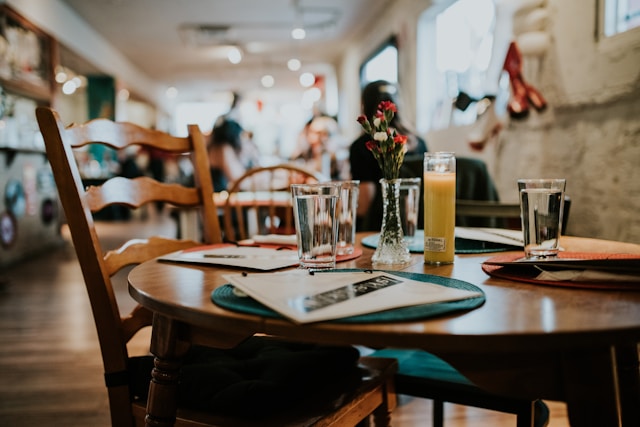
A photo of restaurant

German Restaurant Vocabulary

Start with the most common words, then expand your knowledge with intermediate and advanced vocabulary.

Beginner (A1)

  • beer das Bier
  • bread das Brot
  • meat das Fleisch
  • breakfast das Frühstück
  • dinner das Abendessen
  • lunch das Mittagessen
  • vegetable das Gemüse
  • dish das Gericht
  • glass das Glas
  • knife das Messer
  • ice cream das Eis
  • restaurant das Restaurant
  • salt das Salz
  • water das Wasser
  • fish der Fisch
  • guest der Gast
  • coffee der Kaffee
  • waiter/waitress der Kellner/die Kellnerin
  • cake der Kuchen
  • spoon der Löffel
  • dessert der Nachtisch
  • pepper der Pfeffer
  • rice der Reis
  • juice der Saft
  • salad der Salat
  • chair der Stuhl
  • tea der Tee
  • plate der Teller
  • table der Tisch
  • wine der Wein
  • bar die Bar
  • butter die Butter
  • fork die Gabel
  • kitchen die Küche
  • pasta die Nudeln
  • bill die Rechnung
  • napkin die Serviette
  • menu die Speisekarte
  • soup die Suppe
  • cup die Tasse
  • toilet die Toilette

Elementary (A2)

  • cutlery das Besteck
  • beer glass das Bierglas
  • brunch das Brunch
  • buffet das Buffet
  • main course das Hauptgericht
  • special das Tagesgericht
  • tip das Trinkgeld
  • wine glass das Weinglas
  • oil das Öl
  • exit der Ausgang
  • cocktail der Cocktail
  • entrance der Eingang
  • high chair der Hochstuhl
  • cashier der Kassierer/die Kassiererin
  • chef der Koch/die Köchin
  • mustard der Senf
  • straw der Strohhalm
  • ketchup der/das Ketchup
  • side dish die Beilage
  • candle die Kerze
  • mayonnaise die Mayonnaise
  • reservation die Reservierung
  • bowl die Schüssel
  • sauce die Soße
  • patio die Terrasse
  • uniform die Uniform
  • starter die Vorspeise
  • wine list die Weinkarte

Intermediate & Advanced (B1-C1)

  • takeout das Essen zum Mitnehmen
  • condiment das Gewürz
  • takeout das Takeaway
  • place mat das Set
  • tray das Tablett
  • appetizer die Vorspeise
  • bartender der Barkeeper/die Barkeeperin
  • host/hostess der Host / die Hostess
  • candlestick der Kerzenhalter
  • booster seat der Sitzerhöhung
  • high chair der Hochstuhl
  • non-smoking section der Nichtraucherbereich
  • smoking section der Raucherbereich
  • shaker der Shaker
  • busboy/busgirl der Spüler/die Spülerin
  • waiting area der Wartebereich
  • complaint die Beschwerde
  • coat check die Garderobe
  • pitcher die Karaffe
  • lounge die Lounge
  • menu board die Menütafel
  • doggy bag die Restetüte
  • apron die Schürze
  • menu board die Tageskarte
  • tablecloth die Tischdecke
  • ashtray der Aschenbecher
  • banquet hall der Bankettsaal
  • manager der Geschäftsführer/die Geschäftsführerin
  • centerpiece der Tischschmuck

Practice What You've Learned

Review your German restaurant vocabulary and test your knowledge with interactive practice.

Ready to take the quiz?

Put your new restaurant vocabulary into practice and see how many words you can remember.

Take the quiz

Practice with flashcards

Review German restaurant vocabulary and strengthen your memory with interactive flashcards.

Open flashcards

Example Sentences

In proper context. With highlighted verbs and adjectives.

Beginner & Elementary (A1-A2)

Essential sentences for basic dining situations, ordering food, and describing meals.

  • Der Gast bestellt eine Suppe. The guest orders a soup.
  • Die Kellnerin bringt das Brot. The waitress brings the bread.
  • Wir trinken kühles Bier. We drink cool beer.
  • Er isst einen frischen Salat. He eats a fresh salad.
  • Der Mann bezahlt die Rechnung. The man pays the bill.
  • Die Suppe ist sehr lecker. The soup is very delicious.
  • Das Wasser ist wirklich kalt. The water is really cold.
  • Der Kaffee ist zu heiß. The coffee is too hot.
  • Dieser Teller ist nicht sauber. This plate is not clean.
  • Der Nachtisch schmeckt sehr süß. The dessert tastes very sweet.

Intermediate & Advanced (B1-C1)

More complex restaurant phrasing for reservations, recommendations, and dietary preferences.

  • Wir reservieren einen Tisch für vier Personen. We reserve a table for four people.
  • Der Koch empfiehlt heute den frischen Fisch. The chef recommends the fresh fish today.
  • Der Gast reklamiert das kalte Hauptgericht. The guest complains about the cold main course.
  • Der Barkeeper serviert die Getränke an der Bar. The bartender serves the drinks at the bar.
  • Das Essen verzögert sich leider in der Küche. The food is unfortunately delayed in the kitchen.
  • Der Wein schmeckt absolut hervorragend. The wine tastes absolutely excellent.
  • Die Soße ist überraschend scharf. The sauce is surprisingly spicy.
  • Der Nichtraucherbereich ist sehr gemütlich. The non-smoking area is very cozy.
  • Das Restaurant ist heute Abend komplett ausgebucht. The restaurant is fully booked this evening.
  • Das Brot ist extrem frisch gebacken. The bread is baked extremely fresh.

Frequently Asked Questions

Essential guide to dining vocabulary, polite ordering, and restaurant customs in German.

When ordering in a German restaurant, simple and polite phrasing is essential. Here are standard ways to state your choices:

  • Ich hätte gerne... (I would like to have...)
  • Ich möchte bitte... (I would like..., please)
  • Für mich bitte... (For me, please...)
  • Ich nehme das Tagesgericht. (I will take the daily special.)

Tipping (das Trinkgeld) in Germany, Austria, and Switzerland is customary but not strictly required:

  • Rounding up to the next full Euro or adding around 5% to 10% is standard in restaurants.
  • Say Stimmt so when paying if you want the waiter to keep the change.
  • If paying by card, state the total amount including tip before the server enters it into the terminal.
  • Tips are given directly to the server upon paying, rather than left on the table.

To describe taste, temperature, and food preparation in German restaurants, keep these adjectives in mind:

  • lecker / köstlich (tasty / delicious)
  • frisch / hausgemacht (fresh / homemade)
  • scharf / würzig (spicy / well-seasoned)
  • zart / knusprig (tender / crispy)

Navigating a dining experience involves several common actions. Key German dining verbs include:

  • reservieren (to reserve/book a table)
  • bestellen (to order food or drinks)
  • probieren / schmecken (to taste / to taste good)
  • bezahlen / zahlen (to pay the bill)

German, Austrian, and Swiss German use distinct words for several restaurant items and dishes:

  • In Germany, a server is usually called der Kellner, while in Austria der Ober is still commonly heard.
  • The bill is die Rechnung in Germany and Austria, often called die Note or die Rechnung in Switzerland.
  • Pancake dishes on menus vary: der Pfannkuchen (Germany) vs. die Palatschinke (Austria) vs. die Omelette (Switzerland).
  • Whipped cream with dessert is die Schlagsahne in Germany, der Schlagobers in Austria, and der Schlagrahm in Switzerland.

Explore All German Lessons

Browse all German vocabulary lessons, quizzes, grammar guides, and learning resources.

Browse All Lessons

Photo by Sandra Seitamaa on Unsplash