Vocabulary Lesson

German Sports Vocabulary

In this short lesson, you'll master essential sports vocabulary in German. After learning the words, use the flashcards or quiz to reinforce your knowledge.
A1-C1 Audio Included Quiz Flashcards
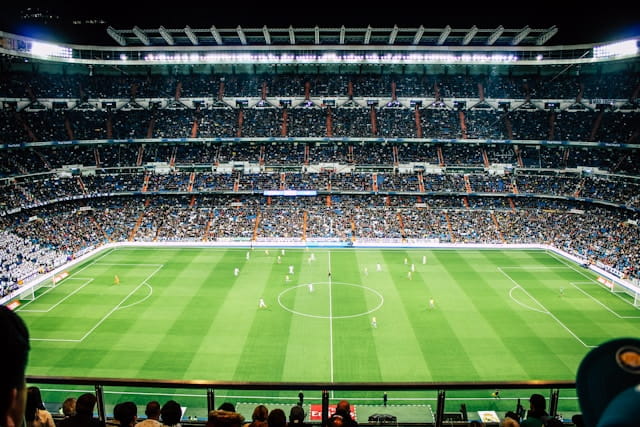
A photo of sports

German Sports Vocabulary

Start with the most common words, then expand your knowledge with intermediate and advanced vocabulary.

Beginner (A1)

  • field das Feld
  • net das Netz
  • game das Spiel
  • goal das Tor
  • ball der Ball
  • fan der Fan
  • point der Punkt
  • player der Spieler/die Spielerin
  • sport der Sport
  • gloves die Handschuhe
  • team die Mannschaft
  • rule die Regel
  • socks die Socken
  • shoes die Sportschuhe
  • practice die Übung

Elementary (A2)

  • warm-up das Aufwärmen
  • score das Ergebnis
  • gym die Sporthalle
  • foul das Foul
  • pool das Schwimmbecken
  • snowboard das Snowboard
  • stadium das Stadion
  • training das Training
  • shirt das Trikot
  • opponent der Gegner/die Gegnerin
  • helmet der Helm
  • ring (boxing/wrestling) der Ring
  • sled der Schlitten
  • racket der Schläger
  • victory der Sieg
  • ski der Ski
  • locker der Spind
  • coach der Trainer/die Trainerin
  • club der Verein
  • competition der Wettbewerb
  • spectator der Zuschauer/die Zuschauerin
  • track die Bahn
  • half-time die Halbzeit
  • strength die Kraft
  • mat die Matte
  • medal die Medaille
  • whistle die Pfeife
  • lap die Runde
  • goggles die Schutzbrille
  • ski die Ski
  • gym die Sporthalle
  • shorts die Sporthose
  • uniform die Uniform
  • penalty die Strafe
  • water bottle die Trinkflasche
  • uniform die Uniform
  • injury die Verletzung

Intermediate & Advanced (B1-C1)

  • fair play das Fairplay
  • knee pad der Knieschoner
  • paddle das Paddel
  • oar das Ruder
  • sweatband das Schweißband
  • sail das Segel
  • trampoline das Trampolin
  • tournament das Turnier
  • tie das Unentschieden
  • athlete der Athlet/die Athletin
  • club (golf) der Golfschläger
  • knee pad der Knieschoner
  • pole (sailing) der Mast
  • mouthguard der Mundschutz
  • trophy der Pokal
  • record der Rekord
  • referee der Schiedsrichter/die Schiedsrichterin
  • locker room der Umkleideraum
  • arena die Arena
  • endurance die Ausdauer
  • flexibility die Beweglichkeit
  • scoreboard die Ergebnistafel
  • hurdle die Hürde
  • performance die Leistung
  • league die Liga
  • defeat die Niederlage
  • relay die Staffel
  • starting line die Startlinie
  • cleats die Stollenschuhe
  • overtime die Verlängerung
  • finish line die Ziellinie
  • tape (athletics) das Absperrband
  • doping das Doping
  • harness das Geschirr
  • springboard das Sprungbrett
  • discus der Diskus
  • commentator der Kommentator/die Kommentatorin
  • shin guard der Schienbeinschutz
  • javelin der Speer
  • baton der Staffelstab
  • pit (motor sports) die Boxengasse
  • championship die Meisterschaft
  • sportsmanship die Sportlichkeit
  • broadcast die Übertragung

Practice What You've Learned

Review your German sports vocabulary and test your knowledge with interactive practice.

Ready to take the quiz?

Put your new sports vocabulary into practice and see how many words you can remember.

Take the quiz

Practice with flashcards

Review German sports vocabulary and strengthen your memory with interactive flashcards.

Open flashcards

Example Sentences

In proper context. With highlighted verbs and adjectives.

Beginner & Elementary (A1-A2)

Basic sentences describing sports activities, equipment, and match situations.

  • Der Spieler wirft den Ball zum Tor. The player throws the ball to the goal.
  • Die Trainerin pfeift laut in der Sporthalle. The coach whistles loudly in the gym.
  • Wir gewinnen heute das wichtige Spiel. We are winning the important game today.
  • Er trägt ein rotes Trikot beim Training. He wears a red jersey during training.
  • Die Athleten laufen schnell auf der Bahn. The athletes run fast on the track.
  • Der neue Ball ist sehr schnell. The new ball is very fast.
  • Das Training war heute besonders anstrengend. Training was particularly exhausting today.
  • Die Mannschaft ist vollkommen bereit für den Wettbewerb. The team is completely ready for the competition.
  • Der Schiedsrichter blieb während des Spiels fair. The referee remained fair during the game.
  • Seine Beine sind nach der Runde sehr müde. His legs are very tired after the lap.

Intermediate & Advanced (B1-C1)

More complex sports commentary, tactical discussions, and athletic descriptions.

  • Die Athletin überwindet mühelos die letzte Hürde. The athlete effortlessly overcomes the last hurdle.
  • Der Kommentator analysiert die Taktik beider Mannschaften. The commentator analyzes the tactics of both teams.
  • Er verteidigt seinen Titel im Turnier erfolgreich. He successfully defends his title in the tournament.
  • Die Läuferin steigert ihre Ausdauer durch tägliches Training. The runner improves her endurance through daily training.
  • Das Team erzielt in der Nachspielzeit den entscheidenden Treffer. The team scores the decisive goal in stoppage time.
  • Nach der Verletzung ist der Spieler wieder einsatzbereit. After the injury, the player is ready for action again.
  • Die gegnerische Mannschaft zeigte eine starke Leistung. The opposing team showed a strong performance.
  • Das Ergebnis des Rennens bleibt bis zum Ende ungewiss. The outcome of the race remains uncertain until the end.
  • Der Sportler erreichte eine hervorragende Kondition. The athlete achieved an outstanding level of fitness.
  • Die Atmosphäre im vollbesetzten Stadion war ausgezeichnet. The atmosphere in the packed stadium was excellent.

Frequently Asked Questions

Master key verbs, phrases, and regional variations to discuss athletic activities and game results like a native.

The most common verb for engaging in general sports activities is Sport treiben or simply Sport machen.

  • Sport machen: 'Ich mache jeden Morgen Sport.' (I do sports every morning.)
  • Sport treiben: 'Er treibt seit Jahren regelmäßig Sport.' (He has been doing sports regularly for years.)
  • Specific sports: Use spielen for ball games (Fußball spielen, Tennis spielen) and direct verbs for activities (schwimmen, laufen, skifahren).

Discussing match results involves specific core verbs in German:

  • gewinnen: To win. ('Wir haben das Turnier gewonnen.')
  • verlieren: To lose. ('Sie haben das Spiel knapp verloren.')
  • ein Tor erzielen / schießen: To score a goal. ('Er hat zwei Tore geschossen.')
  • unentschieden spielen: To draw / tie. ('Die Teams haben unentschieden gespielt.')

When commenting on fitness or sports outcomes, native speakers frequently use these descriptive terms:

  • ausdauernd: Having good stamina or endurance.
  • fit / durchtrainiert: Fit / well-toned.
  • treffsicher: Accurate / precise in shooting or scoring.
  • überlegen: Superior / dominant in a match.
  • anstrengend: Strenuous or physically demanding.

While standard terms like die Mannschaft (team) are universal, regional variations exist for equipment and casual expressions:

  • In Switzerland, a tracksuit is often called der Trainer, whereas in Germany and Austria it is der Trainingsanzug.
  • In Austria, gym slippers or light sneakers are called Turnpatschen, while Germans say Turnschuhe or Sportschuhe.
  • A sled is der Schlitten in Germany, but frequently referred to as die Rodel in Austria.

German features several popular idioms that come straight from sports context:

  • am Ball bleiben: To stay on top of things / keep at it (literally: stay on the ball).
  • einen langen Atem haben: To have perseverance (literally: to have long breath).
  • die Segel streichen: To give up / surrender (from sailing).
  • aus dem Rennen sein: To be out of the running / eliminated.

Explore All German Lessons

Browse all German vocabulary lessons, quizzes, grammar guides, and learning resources.

Browse All Lessons

Photo by Vienna Reyes on Unsplash