Vocabulary Lesson

Italian Days And Months Vocabulary

In this short lesson, you'll master essential days and months vocabulary in Italian. After learning the words, use the flashcards or quiz to reinforce your knowledge.
A1-C1 Audio Included Quiz Flashcards
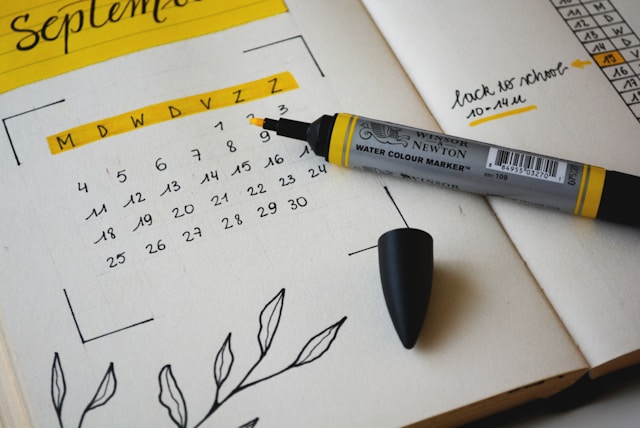
A photo of days and months

Italian Days And Months Vocabulary

Start with the most common words, then expand your knowledge with intermediate and advanced vocabulary.

Beginner (A1)

  • year l'anno
  • calendar il calendario
  • day il giorno
  • holiday la festa
  • weekend il fine settimana
  • today oggi
  • tomorrow domani
  • noon mezzogiorno
  • month il mese
  • moment il momento
  • season la stagione
  • date la data
  • morning la mattina
  • midnight mezzanotte
  • evening la sera
  • week la settimana
  • afternoon il pomeriggio
  • Monday il lunedì
  • Tuesday il martedì
  • Wednesday il mercoledì
  • Thursday il giovedì
  • Friday il venerdì
  • Saturday il sabato
  • Sunday la domenica
  • January gennaio
  • February febbraio
  • March marzo
  • April aprile
  • May maggio
  • June giugno
  • July luglio
  • August agosto
  • September settembre
  • October ottobre
  • November novembre
  • December dicembre
  • yesterday ieri

Elementary (A2)

  • public holiday il giorno festivo
  • weekday il giorno feriale
  • period il periodo
  • schedule l'orario

Intermediate & Advanced (B1-C1)

  • dawn l'alba
  • anniversary l'anniversario
  • dusk il tramonto
  • academic year l'anno accademico
  • leap year l'anno bisestile
  • cycle il ciclo
  • timeframe il termine
  • semester il semestre
  • century il secolo
  • quarter (3 months) il trimestre
  • decade il decennio
  • full moon la luna piena
  • new moon la luna nuova
  • midweek la metà della settimana
  • weeknight la serata infrasettimanale
  • equinox l'equinozio
  • millennium il millennio
  • solstice il solstizio
  • age (historical period) l'età
  • era l'era
  • generation la generazione
  • timeline la linea del tempo
  • fortnight la quindicina
  • eve (day before) la vigilia
  • epoch l'epoca
  • chronology la cronologia

Practice What You've Learned

Review your Italian days and months vocabulary and test your knowledge with interactive practice.

Ready to take the quiz?

Put your new days and months vocabulary into practice and see how many words you can remember.

Take the quiz

Practice with flashcards

Review Italian days and months vocabulary and strengthen your memory with interactive flashcards.

Open flashcards

Example Sentences

In proper context. With highlighted verbs and adjectives.

Beginner & Elementary (A1-A2)

Essential sentences using basic days, months, and time expressions.

  • Il mese di gennaio comincia lunedì. The month of January begins on Monday.
  • Il fine settimana finisce domenica sera. The weekend ends on Sunday evening.
  • Il treno arriva a mezzogiorno. The train arrives at noon.
  • Noi lavoriamo dal lunedì al venerdì. We work from Monday to Friday.
  • Preferisco la mattina perché fa meno caldo. I prefer the morning because it is less hot.
  • Oggi è un giorno molto bello. Today is a very beautiful day.
  • Il mese di agosto è solitamente caldo. The month of August is usually warm.
  • A dicembre il tempo è davvero freddo. In December the weather is really cold.
  • Il primo maggio è un giorno festivo in Italia. The first of May is a public holiday in Italy.
  • Il giovedì è un giorno feriale normale. Thursday is a normal weekday.

Intermediate & Advanced (B1-C1)

More complex structures involving cycles, academic calendars, and precise timeframes.

  • Ogni anno celebriamo il nostro anniversario a giugno. Every year we celebrate our anniversary in June.
  • Il termine per la consegna della domanda scade a metà settimana. The deadline for submitting the application expires midweek.
  • L'equinozio di primavera coincide con il mese di marzo. The spring equinox coincides with the month of March.
  • Gli studenti inaugurano il nuovo anno accademico ad ottobre. Students inaugurate the new academic year in October.
  • Questo seminario intensivo dura un intero trimestre. This intensive seminar lasts a whole quarter.
  • Il duemilaventiquattro è un anno bisestile con ventinove giorni a febbraio. Twenty twenty-four is a leap year with twenty-nine days in February.
  • I pescatori osservano la luna nuova al tramonto. The fishermen observe the new moon at sunset.
  • Preferisco organizzare le cene in una serata infrasettimanale. I prefer organizing dinners on a weeknight.
  • Questo monumento appartiene a un'epoca storica molto antica. This monument belongs to a very ancient historical epoch.
  • Lo storico ha ricostruito la cronologia completa degli eventi. The historian reconstructed the complete chronology of events.

Frequently Asked Questions

Everything you need to know about using Italian days, months, and date formats correctly.

Unlike in English, days of the week and months of the year in Italian are written in lowercase unless they appear at the start of a sentence or form part of an official holiday.

  • Days: lunedì, martedì, mercoledì, giovedì, venerdì, sabato, domenica.
  • Months: gennaio, febbraio, marzo, aprile, maggio, etc.
  • Exceptions: Official historical or religious holidays are capitalized, such as il Primo Maggio (Labor Day).

Italian uses precise prepositional rules depending on whether you are referring to a specific date, a month, or a recurring day.

  • Months: Use a or in (e.g., a luglio or in luglio).
  • Specific dates: Use the definite article il (e.g., il 15 agosto).
  • Recurring days: Use the article il or la before the day (e.g., il lunedì vado in palestra - Every Monday I go to the gym).
  • Years: Use nel (e.g., nel 2024).

In Italian, dates are expressed using cardinal numbers rather than ordinal numbers, with one key exception.

  • Formula: il + cardinal number + month (e.g., il 10 ottobre).
  • First day exception: The first day of any month uses the ordinal number il primo (e.g., il primo gennaio).
  • Full date format: il 25 dicembre 2023.

Italian includes several useful shorthand expressions for talking about days relative to today.

  • L'altro ieri: The day before yesterday.
  • Dopodomani: The day after tomorrow.
  • Oggi a otto: A week from today.
  • Infrasettimanale: Occurring during the working week (midweek).

To inquire about the day or current date, you can use a few standard conversational phrases.

  • To ask the day: Che giorno è oggi? (What day is today?)
  • To ask the date: Quanti ne abbiamo oggi? or Qual è la data di oggi?
  • Typical answer: Oggi è giovedì 12 ottobre.

Explore All Italian Lessons

Browse all Italian vocabulary lessons, quizzes, grammar guides, and learning resources.

Browse All Lessons

Photo by Estée Janssens on Unsplash