Vocabulary Lesson

Spanish City Life Vocabulary

In this short lesson, you'll master essential city life vocabulary in Spanish. After learning the words, use the flashcards or quiz to reinforce your knowledge.
A1-C1 Audio Included Quiz Flashcards
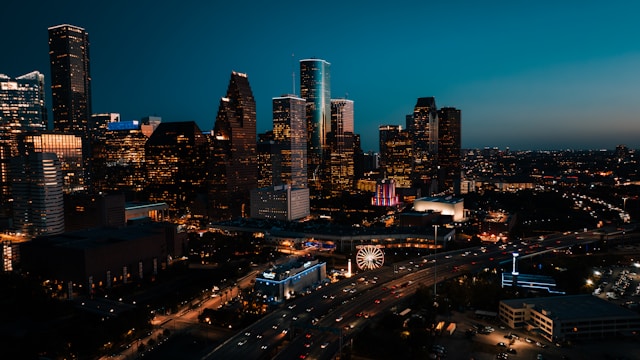
A photo of city life}}

Spanish City Life Vocabulary

Start with the most common words, then expand your knowledge with intermediate and advanced vocabulary.

Beginner (A1)

  • apartment el apartamento
  • bus el autobús
  • neighborhood el barrio
  • downtown el centro
  • cinema el cine
  • car el coche
  • building el edificio
  • garage el garaje
  • gym el gimnasio
  • hospital el hospital
  • market el mercado
  • subway el metro
  • museum el museo
  • park el parque
  • restaurant el restaurante
  • supermarket el supermercado
  • taxi el taxi
  • theater el teatro
  • traffic el tráfico
  • police el/la policía
  • tourist el/la turista
  • avenue la avenida
  • library la biblioteca
  • bicycle la bicicleta
  • café la cafetería
  • street la calle
  • school la escuela
  • subway station la estación de metro
  • train station la estación de tren
  • pharmacy la farmacia
  • church la iglesia
  • bookstore la librería
  • motorcycle la moto
  • office la oficina
  • post office la oficina de correos
  • bakery la panadería
  • bus stop la parada de autobús
  • square la plaza
  • shop la tienda
  • clothing store la tienda de ropa
  • university la universidad
  • shoe store la zapatería

Elementary (A2)

  • bench el banco
  • public toilet el baño público
  • firefighter el bombero/la bombera
  • mailbox el buzón
  • ATM el cajero automático
  • truck el camión
  • mall el centro comercial
  • parking lot el estacionamiento
  • stadium el estadio
  • zebra crossing el paso de cebra
  • crosswalk el paso de peatones
  • pedestrian el peatón/la peatona
  • bridge el puente
  • harbor el puerto
  • kiosk el quiosco
  • resident el residente/la residente
  • noise el ruido
  • traffic light el semáforo
  • public transport el transporte público
  • tunnel el túnel
  • guard el/la guardia
  • sidewalk la acera
  • ambulance la ambulancia
  • highway la autopista
  • butcher shop la carnicería
  • cathedral la catedral
  • police station la comisaría
  • statue la estatua
  • fountain la fuente
  • factory la fábrica
  • gas station la gasolinera
  • jewelry store la joyería
  • toy store la juguetería
  • motorbike la motocicleta
  • taxi stand la parada de taxis
  • grocery store la tienda de comestibles

Intermediate & Advanced (B1-C1)

  • congestion el atasco
  • suburb el suburbio
  • alley el callejón
  • billboard la valla publicitaria
  • district el distrito
  • graffiti el grafiti
  • fire station el parque de bomberos
  • scooter el escúter
  • pavement el pavimento
  • newsstand el puesto de periódicos
  • landmark el lugar emblemático
  • skyscraper el rascacielos
  • tram el tranvía
  • construction la construcción
  • pollution la contaminación
  • street lamp la farola
  • hardware store la ferretería
  • crane la grúa
  • roundabout la rotonda
  • condominium el condominio
  • sewer la alcantarilla

Practice What You've Learned

Review your Spanish city life vocabulary and test your knowledge with interactive practice.

Ready to take the quiz?

Put your new city life vocabulary into practice and see how many words you can remember.

Take the quiz

Practice with flashcards

Review Spanish city life vocabulary and strengthen your memory with interactive flashcards.

Open flashcards

Example Sentences

In proper context. With highlighted verbs and adjectives.

Beginner & Elementary (A1-A2)

Useful sentences with key verbs and adjectives for describing city life at the A1-A2 level.

  • Yo camino por la calle principal. I walk down the main street.
  • Él toma el autobús por la mañana. He takes the bus in the morning.
  • Nosotros vivimos en un apartamento pequeño. We live in a small apartment.
  • ¿Tú compras pan en la panadería? Do you buy bread at the bakery?
  • Ella espera el metro en la estación. She waits for the subway at the station.
  • El parque del centro es muy bonito. The downtown park is very pretty.
  • La biblioteca municipal está cerrada hoy. The municipal library is closed today.
  • Este museo es bastante antiguo. This museum is quite old.
  • La calle cerca del mercado está muy ruidosa. The street near the market is very noisy.
  • El metro siempre llega lleno a esta hora. The subway always arrives full at this hour.

Intermediate & Advanced (B1-C1)

Complex sentences featuring verbs and adjectives related to urban environments and city infrastructure.

  • El ayuntamiento construye un nuevo rascacielos en el distrito financiero. The city council is building a new skyscraper in the financial district.
  • El tráfico se complica mucho durante la hora punta. Traffic becomes very complicated during rush hour.
  • Los peatones cruzan la avenida por el paso de peatones. Pedestrians cross the avenue using the crosswalk.
  • El tren atraviesa el túnel bajo la montaña. The train passes through the tunnel beneath the mountain.
  • Mucha gente evita conducir por el centro debido al atasco. Many people avoid driving through downtown due to the traffic jam.
  • El transporte público de esta ciudad es bastante eficiente. The public transport in this city is quite efficient.
  • La zona industrial resulta muy contaminada. The industrial zone turns out to be very polluted.
  • Las calles del barrio histórico son estrechas y peatonales. The streets of the historic neighborhood are narrow and pedestrianized.
  • El nuevo centro comercial ofrece un diseño muy moderno. The new shopping mall offers a very modern design.
  • La estación principal permanece abierta durante toda la noche. The main station remains open all night long.

Frequently Asked Questions

Frequently asked questions about city vocabulary and navigating urban environments in Spanish.

Vehicle terminology varies significantly across the Spanish-speaking world:

  • Car: coche (Spain), auto or carro (Latin America).
  • Bus: autobús (Spain, Mexico), guagua (Caribbean, Canary Islands), colectivo or bondi (Argentina), camión (Mexico urban/rural).
  • Subway: metro (Spain, Mexico, Chile), subte (Argentina).

Key motion and direction verbs for getting around town include:

  • Cruzar: to cross (e.g., cruzar la calle - to cross the street).
  • Girar / Doblar: to turn (e.g., girar a la derecha - to turn right).
  • Tomar / Coger: to take public transport (e.g., tomar el metro - to take the subway).
  • Bajar / Subir: to get off / get on a vehicle.

Understanding urban spaces helps you describe where things are located accurately:

  • La plaza: A public square or town square, often surrounded by shops or official municipal buildings.
  • El parque: A dedicated green space with grass, trees, and benches meant for recreation.
  • El barrio: A distinct neighborhood or quarter within a city.

Here are standard polite phrases to ask where city spots are located:

  • ¿Dónde está la estación de tren más cercana? (Where is the nearest train station?)
  • ¿Cómo puedo llegar al centro comercial? (How can I get to the shopping mall?)
  • ¿Está lejos el museo de arte? (Is the art museum far away?)

Adjectives in Spanish must agree in gender and number with the noun they modify:

  • Masculine singular: un centro comercial moderno.
  • Feminine singular: una avenida ruidosa.
  • Plural forms: unos edificios altos, unas calles estrechas.

Explore All Spanish Lessons

Browse all Spanish vocabulary lessons, quizzes, grammar guides, and learning resources.

Browse All Lessons

Photo by Jeswin Thomas on Unsplash