Vocabulary Lesson

Spanish Clothes Vocabulary

In this short lesson, you'll master essential clothes vocabulary in Spanish. After learning the words, use the flashcards or quiz to reinforce your knowledge.
A1-C1 Audio Included Quiz Flashcards
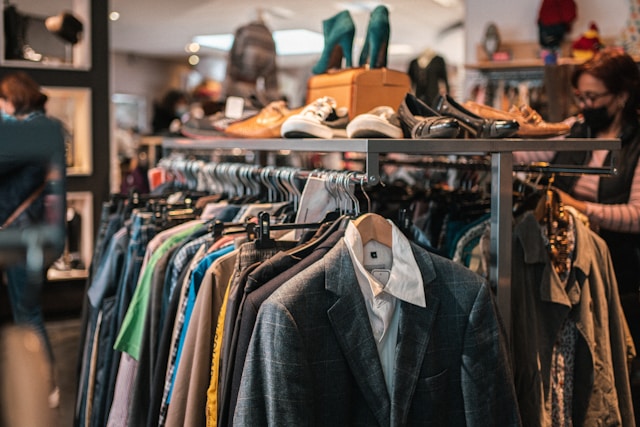
A photo of clothes}}

Spanish Clothes Vocabulary

Start with the most common words, then expand your knowledge with intermediate and advanced vocabulary.

Beginner (A1)

  • belt el cinturón
  • pants el pantalón
  • hat el sombrero
  • dress el vestido
  • blouse la blusa
  • scarf la bufanda
  • shirt la camisa
  • T-shirt la camiseta
  • jacket la chaqueta
  • skirt la falda
  • cap la gorra
  • boots las botas
  • socks los calcetines
  • shorts los pantalones cortos
  • jeans los vaqueros
  • shoes los zapatos

Elementary (A2)

  • coat el abrigo
  • swimming trunks el bañador
  • bikini el bikini
  • pocket el bolsillo
  • purse el bolso
  • button el botón
  • vest el chaleco
  • beanie el gorro
  • pajamas el pijama
  • polo shirt el polo
  • sweater el suéter
  • suit el traje
  • swimsuit el traje de baño
  • uniform el uniforme
  • tie la corbata
  • underwear la ropa interior
  • flip-flops las chanclas
  • slippers las pantuflas
  • sandals las sandalias
  • sneakers las zapatillas
  • gloves los guantes
  • high heels los zapatos de tacón

Intermediate & Advanced (B1-C1)

  • briefs el calzoncillo
  • tracksuit el chándal
  • bowtie el corbatín
  • collar el cuello
  • cardigan el cárdigan
  • apron el delantal
  • raincoat el impermeable
  • overalls el overol
  • handkerchief el pañuelo
  • bra el sujetador
  • turtleneck el suéter de cuello alto
  • bathrobe la bata
  • beret la boina
  • tank top la camiseta sin mangas
  • windbreaker la cazadora
  • zipper la cremallera
  • sleeve la manga
  • hoodie la sudadera con capucha
  • leggings las mallas
  • mittens las manoplas
  • stockings las medias
  • boxers los calzoncillos bóxer
  • parka el anorak
  • pantyhose las medias de nylon

Practice What You've Learned

Review your Spanish clothes vocabulary and test your knowledge with interactive practice.

Ready to take the quiz?

Put your new clothes vocabulary into practice and see how many words you can remember.

Take the quiz

Practice with flashcards

Review Spanish clothes vocabulary and strengthen your memory with interactive flashcards.

Open flashcards

Example Sentences

In proper context. With highlighted verbs and adjectives.

Beginner & Elementary (A1-A2)

Simple sentences about clothing and daily routines.

  • Yo me pongo los zapatos cada mañana. I put on my shoes every morning.
  • Ella necesita lavar la camisa. She needs to wash the shirt.
  • Nosotros compramos un nuevo abrigo. We bought a new coat.
  • Tú siempre usas un sombrero en verano. You always wear a hat in summer.
  • Mi madre plancha el vestido. My mother irons the dress.
  • La bufanda es muy larga. The scarf is very long.
  • El pantalón está sucio. The pants are dirty.
  • La chaqueta nueva es bonita. The new jacket is pretty.
  • Los calcetines son cómodos. The socks are comfortable.
  • La falda es corta. The skirt is short.

Intermediate & Advanced (B1-C1)

More complex sentences describing clothing details and actions.

  • El sastre confeccionó el traje a medida. The tailor tailored the suit to measure.
  • La modista adaptó el cuello del cárdigan. The dressmaker adjusted the collar of the cardigan.
  • Debemos preservar la calidad de la lana. We must preserve the quality of the wool.
  • El diseñador combinó los colores del overol. The designer combined the colors of the overalls.
  • La tela del impermeable repele el agua. The raincoat fabric repels water.
  • El corbatín de seda es elegante. The silk bowtie is elegant.
  • La cremallera de esta chaqueta es resistente. The zipper on this jacket is durable.
  • Las medias de nylon son delicadas. The nylon stockings are delicate.
  • El anorak técnico es impermeable. The technical parka is waterproof.
  • La tela de la bata es suave. The bathrobe fabric is soft.

Frequently Asked Questions

Common questions and practical tips for using Spanish clothes vocabulary

Here are key phrases you'll need when shopping, getting dressed, or describing clothing issues.

  • When shopping: "¿Tiene esto en otra talla?" (Do you have this in another size?), "¿Me lo puedo probar?" (Can I try it on?), "¿Dónde están los probadores?" (Where are the fitting rooms?).
  • Getting dressed: "Me pongo la camisa" (I put on the shirt), "Me quito los zapatos" (I take off my shoes), "Me abrocho el cinturón" (I fasten my belt).
  • Describing issues: "La cremallera está rota" (The zipper is broken), "Se me ha perdido un botón" (I've lost a button), "La manga se ha encogido" (The sleeve has shrunk).
  • Complimenting: "Ese vestido te queda muy bien" (That dress looks great on you), "Me encanta tu chaqueta nueva" (I love your new jacket).

Use the verb llevar (to wear) for what you have on, and tener (to have) for what you own. Combine them with clothing vocabulary and descriptive adjectives.

  • Describing an outfit: "Hoy llevo unos vaqueros, una camiseta y una chaqueta" (Today I'm wearing jeans, a T-shirt, and a jacket).
  • Talking about ownership: "Tengo un abrigo negro y un suéter gris" (I have a black coat and a gray sweater), "No tengo zapatos de tacón" (I don't have high heels).
  • Using colors and materials: "Llevo una falda de cuero" (I'm wearing a leather skirt), "Tengo una bufanda de lana" (I have a wool scarf).
  • Expressing need: "Necesito unos calcetines nuevos" (I need new socks), "Tengo que comprar un traje" (I have to buy a suit).

Adjectives must agree in gender (masculine/feminine) and number (singular/plural) with the noun they describe. Here are essential ones for clothes.

  • For fit: "apretado/a" (tight), "holgado/a" (loose/baggy), "cómodo/a" (comfortable), "ajustado/a" (fitted). Example: "Estos pantalones están muy apretados" (These pants are very tight).
  • For condition: "nuevo/a" (new), "viejo/a" (old), "limpio/a" (clean), "sucio/a" (dirty), "roto/a" (broken/torn). Example: "La camisa está sucia" (The shirt is dirty).
  • For style: "elegante" (elegant), "informal" (casual), "moderno/a" (modern), "clásico/a" (classic), "bonito/a" (pretty). Example: "Es un vestido muy elegante" (It's a very elegant dress).
  • For size & length: "largo/a" (long), "corto/a" (short), "grande" (big/large), "pequeño/a" (small). Example: "La falda es demasiado corta" (The skirt is too short).

Mastering these verbs will allow you to describe all actions related to clothing, from buying to washing.

  • Ponerse (to put on): "Me pongo los guantes" (I put on my gloves).
  • Quitarse (to take off): "Se quita el sombrero" (He takes off his hat).
  • Llevar (to wear): "Ella lleva una corbata" (She is wearing a tie).
  • Probarse (to try on): "Voy a probarme estos zapatos" (I'm going to try on these shoes).
  • Comprar (to buy): "Compramos un impermeable" (We bought a raincoat).
  • Lavar (to wash): "Lavo la ropa interior" (I wash the underwear).
  • Planchar (to iron): "Plancho la camisa" (I iron the shirt).
  • Guardar (to put away/store): "Guardo el traje de baño en el armario" (I put the swimsuit away in the closet).

While most terms are widely understood, some countries have their own common words for specific items. Here are notable differences.

  • Swimsuit: In Spain, it's "el bañador" (for men) or "el bikini/el bañador" (for women). In Mexico and much of Latin America, "el traje de baño" is universal. In Argentina, "la malla" is common.
  • Pants/Trousers: "El pantalón" is standard. However, in Argentina and Uruguay, "el pantalón" is used, but the plural "los pantalones" often refers to a single pair (like in English).
  • Jeans: "Los vaqueros" is common in Spain. In Mexico, "los jeans" (pronounced 'yeens') is frequently used. In Argentina, "los jeans" or "el jean" (singular) is common.
  • Sweatshirt/Hoodie: In Spain, "la sudadera (con capucha)". In Mexico, "la sudadera" or "el hoodie". In Argentina, "la buzo" or "la campera" (which can also mean jacket).
  • Underwear (briefs): "Los calzoncillos" is standard. In Mexico, "los calzones" is often used. In Chile, "los calzones" or "los pantaletas" (for men). In Argentina, "los calzoncillos" or "las bombachas" (for women's underwear).

Explore All Spanish Lessons

Browse all Spanish vocabulary lessons, quizzes, grammar guides, and learning resources.

Browse All Lessons

Photo by Hugo Clément on Unsplash