Vocabulary Lesson

Spanish Colors Vocabulary

In this short lesson, you'll master essential colors vocabulary in Spanish. After learning the words, use the flashcards or quiz to reinforce your knowledge.
A1-C1 Audio Included Quiz Flashcards
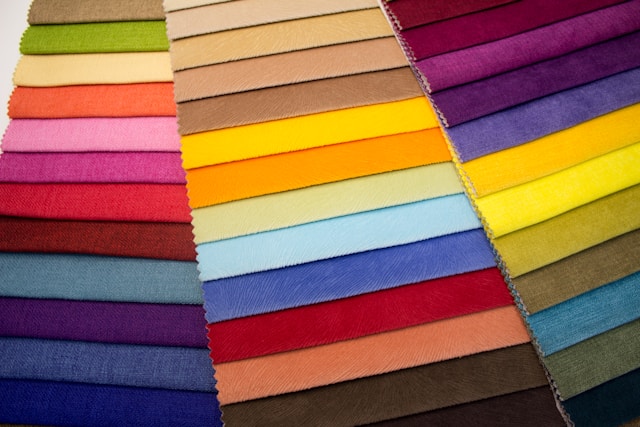
A photo of colors}}

Spanish Colors Vocabulary

Start with the most common words, then expand your knowledge with intermediate and advanced vocabulary.

Beginner (A1)

  • yellow el amarillo
  • blue el azul
  • white el blanco
  • gray el gris
  • brown el marrón
  • orange el naranja
  • black el negro
  • red el rojo
  • pink el rosa
  • green el verde

Elementary (A2)

  • beige el beige
  • bronze el bronce
  • copper el cobre
  • gold el dorado
  • purple el morado
  • pastel el pastel
  • silver el plateado

Intermediate & Advanced (B1-C1)

  • khaki el caqui
  • lavender el lila
  • neon el neón
  • turquoise el turquesa
  • olive el verde oliva
  • violet el violeta
  • aqua el aguamarina
  • indigo el añil
  • cyan el cian
  • emerald el esmeralda
  • maroon el granate
  • magenta el magenta
  • ivory el marfil
  • teal el verde azulado
  • crimson el carmesí

Practice What You've Learned

Review your Spanish colors vocabulary and test your knowledge with interactive practice.

Ready to take the quiz?

Put your new colors vocabulary into practice and see how many words you can remember.

Take the quiz

Practice with flashcards

Review Spanish colors vocabulary and strengthen your memory with interactive flashcards.

Open flashcards

Example Sentences

In the context of a market. With highlighted verbs and adjectives.

Beginner & Elementary (A1-A2)

Simple sentences using basic color vocabulary and everyday verbs/adjectives.

  • Mi mamá pinta la pared de azul. My mom paints the wall blue.
  • El niño usa un lápiz rojo. The boy uses a red pencil.
  • Yo veo un auto blanco. I see a white car.
  • Ella necesita un vestido negro. She needs a black dress.
  • Nosotros compramos flores amarillas. We buy yellow flowers.
  • El cielo está gris hoy. The sky is gray today.
  • La mesa de madera es marrón. The wooden table is brown.
  • El pastel de cumpleaños es rosa. The birthday cake is pink.
  • El césped del parque está verde. The park grass is green.
  • La bandera de mi país es blanca. My country's flag is white.

Intermediate & Advanced (B1-C1)

More complex sentences with nuanced vocabulary and sophisticated structures.

  • El diseñador combina el lila con el turquesa. The designer combines lavender with turquoise.
  • El artista plasma la emoción en tonos carmesí. The artist captures the emotion in crimson tones.
  • La luz del atardecer tiñe el mar de añil. The sunset light dyes the sea indigo.
  • El arquitecto incorpora detalles en dorado y plateado. The architect incorporates details in gold and silver.
  • La moda actual prefiere los tonos neutros como el beige y el caqui. Current fashion prefers neutral tones like beige and khaki.
  • El esmalte de uñas que compré es magenta. The nail polish I bought is magenta.
  • El jarrón antiguo era de un verde oliva desvaído. The old vase was a faded olive green.
  • La joya más valiosa era una esmeralda profunda. The most valuable jewel was a deep emerald.
  • El tejido de seda tenía un brillo neón intenso. The silk fabric had an intense neon shine.
  • El mar en la costa parecía aguamarina cristalino. The sea on the coast looked crystal aqua.

Frequently Asked Questions

Frequently Asked Questions about Spanish Color Vocabulary

Colors come up in many everyday conversations. Here are some common phrases to describe things, ask questions, or express preferences.

  • ¿De qué color es...? (What color is...?) - Use this to ask about the color of any object. ¿De qué color es tu coche? (What color is your car?)
  • Me gusta el/la... (I like the...) - To state a color preference. Me gusta el azul. (I like blue.)
  • Es de color... (It is the color...) - A standard way to state a color. La puerta es de color verde. (The door is green.)
  • Quedarse blanco/a (To turn white) - An idiom meaning to be shocked or scared. Se quedó blanco al ver la noticia. (He turned white when he saw the news.)
  • Verlo todo de color de rosa (To see everything through rose-colored glasses) - To be overly optimistic.

Talking about color preferences is a great conversation starter. You can use simple adjectives and combine colors.

  • Use Mi color favorito es... (My favorite color is...). Mi color favorito es el morado.
  • Describe shades with claro (light) and oscuro (dark). Prefiero el azul oscuro. (I prefer dark blue.)
  • Combine colors with y (and). Me encantan el negro y el plateado juntos. (I love black and silver together.)
  • Explain why you like a color. Me gusta el verde porque es relajante. (I like green because it's relaxing.)
  • Ask others: ¿Cuál es tu color favorito? (What is your favorite color?)

Adjectives help you describe shades, intensities, and qualities of colors more precisely.

  • claro / oscuro (light / dark) - verde claro (light green), rojo oscuro (dark red)
  • brillante / mate (bright / matte) - amarillo brillante (bright yellow), azul mate (matte blue)
  • intenso / suave (intense / soft) - un naranja intenso (an intense orange), un rosa suave (a soft pink)
  • vivo / apagado (vivid / dull) - un turquesa vivo (a vivid turquoise), un gris apagado (a dull gray)
  • pastel / neón (pastel / neon) - tonos pastel (pastel tones), verde neón (neon green)

Verbs let you talk about actions related to colors, like changing, seeing, or using them.

  • ser / estar (to be) - For permanent or temporary states. El cielo es azul. El cielo está gris hoy. (The sky is blue. The sky is gray today.)
  • pintar (to paint) - Voy a pintar la habitación de blanco. (I'm going to paint the room white.)
  • ver (to see) - Veo un pájaro rojo. (I see a red bird.)
  • combinar (to combine/match) - ¿Cómo combino el lila? (How do I match lavender?)
  • teñir (to dye) - Quiero teñir mi pelo de carmesí. (I want to dye my hair crimson.)

Yes, some color words differ significantly between Spanish-speaking countries. Here are key examples.

  • Orange: While naranja is universal, in parts of Argentina, Uruguay, and Paraguay, anaranjado is commonly used as the adjective.
  • Brown: In Mexico and parts of Central America, café is frequently used instead of marrón. Una mesa café (a brown table).
  • Blue: In some Andean regions like Bolivia and Peru, celeste (sky blue) is often specified instead of just azul for light blue.
  • Purple: In Chile, violetta is a common, colloquial variant for violeta. In the Caribbean, púrpura is also widely used alongside morado.
  • Pink: In Argentina and Uruguay, it's very common to use rosado instead of rosa. Un vestido rosado (a pink dress).

Explore All Spanish Lessons

Browse all Spanish vocabulary lessons, quizzes, grammar guides, and learning resources.

Browse All Lessons

Photo by Ekaterina Grosheva on Unsplash