Vocabulary Lesson

Spanish Family Vocabulary

In this short lesson, you'll master essential family vocabulary in Spanish. After learning the words, use the flashcards or quiz to reinforce your knowledge.
A1-C1 Audio Included Quiz Flashcards
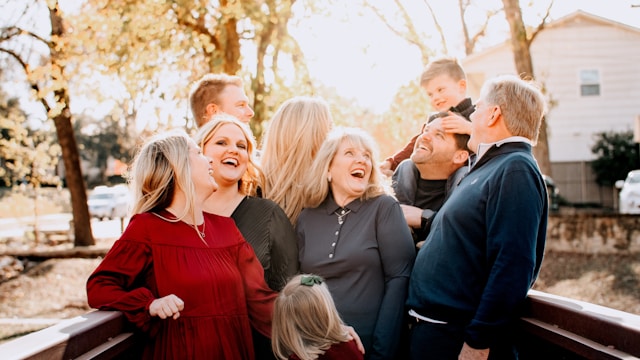
A picture of a family for Spanish family vocabulary lesson

Spanish Family Vocabulary

Start with the most common words, then expand your knowledge with intermediate and advanced vocabulary.

Beginner (A1)

  • family la familia
  • mother la madre
  • father el padre
  • mom la mamá
  • dad el papá
  • parents los padres
  • son el hijo
  • daughter la hija
  • boy/child el niño
  • girl/child la niña
  • brother el hermano
  • sister la hermana
  • baby el bebé
  • grandfather el abuelo
  • grandmother la abuela
  • grandparents los abuelos
  • uncle el tío
  • aunt la tía
  • cousin (male) el primo
  • cousin (female) la prima
  • husband el marido
  • wife la esposa
  • spouse el esposo

Elementary (A2)

  • relative el pariente
  • relatives los familiares
  • grandson el nieto
  • granddaughter la nieta
  • nephew el sobrino
  • niece la sobrina
  • partner/couple la pareja
  • brother-in-law el cuñado
  • sister-in-law la cuñada
  • father-in-law el suegro
  • mother-in-law la suegra
  • stepfather el padrastro
  • stepmother la madrastra
  • twin el gemelo

Intermediate & Advanced (B1-C1)

  • ancestor el antepasado
  • descendant el descendiente
  • lineage el linaje
  • nuclear family la familia nuclear
  • extended family la familia extendida
  • single-parent family la familia monoparental
  • adoption la adopción
  • custody la custodia
  • divorce el divorcio
  • marriage el matrimonio
  • spouse el cónyuge
  • firstborn el primogénito
  • generation la generación
  • family tree el árbol genealógico

Practice What You've Learned

Review your Spanish family vocabulary and test your knowledge with interactive practice.

Ready to take the quiz?

Put your new family vocabulary into practice and see how many words you can remember.

Take the quiz

Practice with flashcards

Review Spanish family vocabulary and strengthen your memory with interactive flashcards.

Open flashcards

Example Sentences

In the context of a market. With highlighted verbs and adjectives.

Beginner & Elementary (A1-A2)

Everyday family conversations using basic A1/A2 family vocabulary.

  • Mi madre vive conmigo. My mother lives with me.
  • Yo tengo un hermano y una hermana. I have a brother and a sister.
  • Mi padre trabaja en una oficina. My father works in an office.
  • Nosotros visitamos a mis abuelos los domingos. We visit my grandparents on Sundays.
  • Mi hermana tiene un bebé pequeño. My sister has a small baby.
  • Mi familia es grande. My family is big.
  • Mi abuelo es mayor. My grandfather is older.
  • Mi hermano es joven. My brother is young.
  • Mi prima es amable. My cousin is kind.
  • Mi familia es unida. My family is close.

Intermediate & Advanced (B1-C1)

Family relationships and social topics using intermediate and advanced vocabulary.

  • Mis padres adoptaron a mi hermano cuando era pequeño. My parents adopted my brother when he was young.
  • La pareja decidió formar una familia. The couple decided to start a family.
  • Mis abuelos cuentan historias de sus antepasados. My grandparents tell stories about their ancestors.
  • La familia mantiene contacto después del divorcio. The family keeps in touch after the divorce.
  • Muchas familias celebran sus tradiciones juntas. Many families celebrate their traditions together.
  • La familia extendida es importante en muchas culturas. Extended family is important in many cultures.
  • Su relación familiar es muy cercana. Their family relationship is very close.
  • El árbol genealógico es bastante complejo. The family tree is quite complex.
  • La custodia compartida es una situación común. Shared custody is a common situation.
  • El matrimonio tradicional sigue siendo popular. Traditional marriage is still popular.

Frequently Asked Questions

Essential tips on introducing family members, describing relationships, understanding regional differences, and using common Spanish family expressions.

These basic expressions help you introduce family members, describe relationships, and talk about people close to you:

  • Mi familia... (My family...) — Used to introduce your family. Example: Mi familia es grande. (My family is big.)
  • Tengo... (I have...) — Used to talk about family members. Example: Tengo dos hermanos. (I have two brothers.)
  • Mi madre / Mi padre... (My mother / My father...) — Common ways to introduce parents. Example: Mi padre vive en Madrid. (My father lives in Madrid.)
  • Es mi hermano / hermana. (He/She is my brother/sister.) — Used to identify family members.
  • Mis abuelos... (My grandparents...) — Used when talking about grandparents. Example: Mis abuelos viven cerca. (My grandparents live nearby.)
  • Tengo una familia pequeña. (I have a small family.) — Used to describe family size.
  • Somos cinco en mi familia. (There are five people in my family.) — Used to say how many people are in your family.

Spanish uses simple words and expressions to explain how family members are connected:

  • Mi hermano mayor (My older brother) — Example: Mi hermano mayor tiene 25 años. (My older brother is 25 years old.)
  • Mi hermana menor (My younger sister) — Example: Mi hermana menor estudia medicina. (My younger sister studies medicine.)
  • Hijo único (Only child) — Example: Soy hijo único. (I am an only child.)
  • Mis padres (My parents) — Used for mother and father together. Example: Mis padres trabajan mucho. (My parents work a lot.)
  • Familia cercana (Close family) — Example: Tengo una familia cercana. (I have a close family.)
  • Familia extendida (Extended family) — Includes grandparents, uncles, cousins, and other relatives.

Family words are mostly understood across the Spanish-speaking world, but some countries use different informal terms or have regional preferences:

  • Mom: In Spain, Mexico, Colombia, Argentina, and most Spanish-speaking countries, mamá is standard. In Mexico, Central America, and parts of South America, mami is also commonly used as an affectionate term.
  • Dad: Papá is used everywhere. In Mexico, Colombia, Venezuela, and other Latin American countries, papi is often used affectionately. In Spain, papá is more common in everyday speech.
  • Grandparents: Abuelo and abuela are universal. In Spain, Mexico, Argentina, Colombia, and other countries, affectionate forms like abuelito and abuelita are very common.
  • Brother/Sister: Hermano and hermana are used throughout the Spanish-speaking world. In Mexico and Central America, informal shortened forms like mano can sometimes be heard among friends.
  • Child: In Spain, niño and niña are common. In Mexico, chamaco or chamaca may be used informally. In Argentina and Uruguay, pibe and piba are common informal words for young people.
  • Son/Daughter: Hijo and hija are universal. In Mexico, Colombia, and Central America, parents may use affectionate forms like mijo or mija (short for mi hijo / mi hija).
  • Family: Familia is universal, but in countries like Mexico, Colombia, and Peru, people often use la familia broadly to include grandparents, cousins, aunts, and uncles.

These adjectives help you describe family size, relationships, and personalities:

  • Grande: Big/large — Mi familia es grande. (My family is big.)
  • Pequeño/a: Small — Tengo una familia pequeña. (I have a small family.)
  • Cercano/a: Close — Tengo una relación cercana con mi hermana. (I have a close relationship with my sister.)
  • Amable: Kind — Mi abuela es muy amable. (My grandmother is very kind.)
  • Joven: Young — Mi hermano es joven. (My brother is young.)
  • Mayor: Older/elder — Mi hermano mayor vive aquí. (My older brother lives here.)
  • Unido/a: Close-knit/united — Mi familia es muy unida. (My family is very close.)

These verbs are useful for talking about family life, relationships, and important events:

  • Tener: To have — Tengo dos hermanos. (I have two brothers.)
  • Vivir: To live — Vivo con mis padres. (I live with my parents.)
  • Visitar: To visit — Visito a mis abuelos. (I visit my grandparents.)
  • Casarse: To get married — Mis padres se casaron jóvenes. (My parents got married young.)
  • Tener hijos: To have children — Quieren tener hijos. (They want to have children.)
  • Cuidar: To take care of — Cuido a mi hermano pequeño. (I take care of my younger brother.)
  • Adoptar: To adopt — La familia adoptó un niño. (The family adopted a child.)

Explore All Spanish Lessons

Browse all Spanish vocabulary lessons, quizzes, grammar guides, and learning resources.

Browse All Lessons

Photo by Cameorn Steele on Unsplash