Vocabulary Lesson

Spanish Money Vocabulary

In this short lesson, you'll master essential money vocabulary in Spanish. After learning the words, use the flashcards or quiz to reinforce your knowledge.
A1-C1 Audio Included Quiz Flashcards
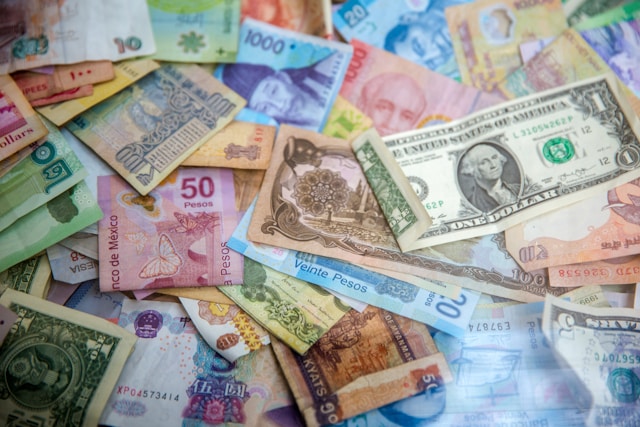
A photo of money}}

Spanish Money Vocabulary

Start with the most common words, then expand your knowledge with intermediate and advanced vocabulary.

Beginner (A1)

  • bank el banco
  • bill el billete
  • change el cambio
  • cost el costo
  • money el dinero
  • market el mercado
  • purse el monedero
  • price el precio
  • wallet la cartera
  • coin la moneda

Elementary (A2)

  • savings el ahorro
  • cashier el cajero/la cajera
  • check el cheque
  • cash el efectivo
  • payment el pago
  • receipt el recibo
  • salary el salario
  • wage el sueldo
  • piggy bank la alcancía
  • account la cuenta
  • tip la propina

Intermediate & Advanced (B1-C1)

  • credit el crédito
  • deposit el depósito
  • fund el fondo
  • expense el gasto
  • tax el impuesto
  • income el ingreso
  • interest el interés
  • loan el préstamo
  • withdrawal el retiro
  • balance el saldo
  • treasure el tesoro
  • safe la caja fuerte
  • checkbook la chequera
  • crisis la crisis
  • debt la deuda
  • donation la donación
  • economy la economía
  • invoice la factura
  • profit la ganancia
  • fine la multa
  • poverty la pobreza
  • loss la pérdida
  • fee la tarifa
  • transaction la transacción
  • transfer la transferencia
  • funds los fondos
  • shareholder el accionista/la accionista
  • bond el bono
  • capital el capital
  • debit el débito
  • fraud el fraude
  • exchange el intercambio
  • investor el inversionista/la inversionista
  • installment el pago a plazos
  • down payment el pago inicial
  • budget el presupuesto
  • overdraft el sobregiro
  • subsidy el subsidio
  • exchange rate el tipo de cambio
  • stock la acción
  • allowance la asignación
  • vault la bóveda
  • charity la caridad
  • fundraiser la colecta
  • commission la comisión
  • compensation la compensación
  • depression (economic) la depresión
  • fortune la fortuna
  • collateral la garantía
  • inheritance la herencia
  • mortgage la hipoteca
  • inflation la inflación
  • investment la inversión
  • stake la participación
  • pension la pensión
  • recession la recesión
  • wealth la riqueza
  • grant la subvención
  • assets los activos
  • liabilities los pasivos
  • dividend el dividendo
  • yield el rendimiento
  • ransom el rescate
  • bailout el rescate financiero
  • bribe el soborno
  • audit la auditoría
  • bankruptcy la bancarrota
  • portfolio la cartera de inversiones
  • deflation la deflación
  • speculation la especulación
  • liquidity la liquidez
  • embezzlement la malversación
  • finance las finanzas

Practice What You've Learned

Review your Spanish money vocabulary and test your knowledge with interactive practice.

Ready to take the quiz?

Put your new money vocabulary into practice and see how many words you can remember.

Take the quiz

Practice with flashcards

Review Spanish money vocabulary and strengthen your memory with interactive flashcards.

Open flashcards

Example Sentences

In proper context. With highlighted verbs and adjectives.

Beginner & Elementary (A1-A2)

Essential sentences using basic verbs and adjectives related to money and shopping.

  • María compra fruta en el mercado. María buys fruit at the market.
  • Juan paga la cuenta con dinero en efectivo. Juan pays the bill with cash.
  • El niño guarda sus monedas en la alcancía. The boy saves his coins in the piggy bank.
  • Ella necesita el recibo para el cambio. She needs the receipt for the change.
  • El cajero cobra el costo total del producto. The cashier charges the total cost of the product.
  • El precio de este libro es muy alto. The price of this book is very high.
  • Comprar ropa nueva en esta tienda es caro. Buying new clothes at this store is expensive.
  • El pan en este mercado es bastante barato. The bread at this market is quite cheap.
  • El sueldo de un principiante suele ser bajo. A beginner's salary is usually low.
  • Tengo un billete nuevo en mi cartera. I have a new bill in my wallet.

Intermediate & Advanced (B1-C1)

More complex sentences covering banking, finance, and investment terms.

  • Decidieron invertir sus ahorros en la bolsa de valores. They decided to invest their savings in the stock market.
  • El cliente debe solicitar un préstamo al banco. The client must apply for a loan at the bank.
  • La empresa intenta reducir sus gastos operativos. The company is trying to reduce its operating expenses.
  • Puedes transferir los fondos a otra cuenta bancaria. You can transfer the funds to another bank account.
  • El inversionista logró acumular una gran riqueza. The investor managed to accumulate great wealth.
  • El país enfrentó un gran problema financiero. The country faced a major financial problem.
  • Esa inversión resultó ser muy rentable. That investment turned out to be very profitable.
  • Debes pagar la tarifa mensual del servicio. You must pay the monthly fee for the service.
  • La inflación provocó una subida constante de precios. Inflation caused a constant rise in prices.
  • Guardar los activos en un lugar seguro es fundamental. Keeping assets in a safe place is essential.

Frequently Asked Questions

Frequently asked questions about financial vocabulary and payment expressions in Spanish.

There are several common phrasing choices depending on the context and location when asking for prices:

  • ¿Cuánto cuesta? or ¿Cuánto cuestan? (How much does it cost / do they cost?)
  • ¿Cuánto es? (How much is it total?)
  • ¿Qué precio tiene? (What price does it have?)
  • ¿A cuánto está? (How much is it going for? - often used at produce markets)

While both words translate to money earned from work, they carry subtle distinctions:

  • El sueldo: Refers to a fixed, regular wage (usually monthly or biweekly) agreed upon in a contract.
  • El salario: A broader term that often refers to pay based on hourly or daily work.
  • In everyday conversation, native speakers often use them interchangeably for office or general jobs.

When paying for goods or services, use these common verb phrases:

  • Pagar en efectivo: To pay in cash (e.g., Prefiero pagar en efectivo).
  • Pagar con tarjeta (de crédito / de débito): To pay with a credit or debit card.
  • Hacer una transferencia: To make a bank transfer.
  • Dejar propina: To leave a tip at a restaurant or café.

Describing prices and economic conditions requires specific adjectives:

  • Caro / Barato: Expensive / Cheap.
  • Gratis / Gratuito: Free of charge.
  • Rentable: Profitable or yield-bearing.
  • Asequible / Económico: Affordable / Economical.

Money is one of the most prolific categories for regional slang across the Spanish-speaking world:

  • Pasta: Extremely popular in Spain for cash or money.
  • Lana: Common slang for money in Mexico.
  • Plata: Used across Colombia, Argentina, Peru, Chile, and Central America instead of dinero.
  • Chavos: Frequently used in Puerto Rico to mean cash or coins.

Explore All Spanish Lessons

Browse all Spanish vocabulary lessons, quizzes, grammar guides, and learning resources.

Browse All Lessons

Photo by Jason Leung on Unsplash