Vocabulary Lesson

Spanish Nature Vocabulary

In this short lesson, you'll master essential nature vocabulary in Spanish. After learning the words, use the flashcards or quiz to reinforce your knowledge.
A1-C1 Audio Included Quiz Flashcards
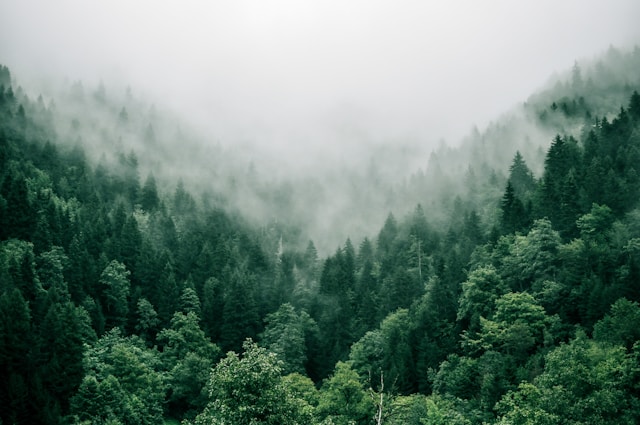
A photo of nature}}

Spanish Nature Vocabulary

Start with the most common words, then expand your knowledge with intermediate and advanced vocabulary.

Beginner (A1)

  • forest el bosque
  • field el campo
  • sky el cielo
  • lake el lago
  • sea el mar
  • river el río
  • wind el viento
  • tree el árbol
  • sand la arena
  • hill la colina
  • star la estrella
  • flower la flor
  • leaf la hoja
  • rain la lluvia
  • moon la luna
  • mountain la montaña
  • snow la nieve
  • cloud la nube
  • wave la ola
  • stone la piedra
  • plant la planta
  • beach la playa
  • rock la roca

Elementary (A2)

  • sunrise el amanecer
  • rainbow el arcoíris
  • desert el desierto
  • pond el estanque
  • nest el nido
  • ocean el océano
  • dust el polvo
  • path el sendero
  • thunder el trueno
  • valley el valle
  • breeze la brisa
  • waterfall la cascada
  • cave la cueva
  • grass la hierba
  • fog la niebla
  • sunset la puesta de sol
  • branch la rama
  • seed la semilla
  • soil la tierra
  • storm la tormenta

Intermediate & Advanced (B1-C1)

  • cliff el acantilado
  • bush el arbusto
  • creek el arroyo
  • sprout el brote
  • bud el capullo
  • canyon el cañón
  • hail el granizo
  • horizon el horizonte
  • oasis el oasis
  • marsh el pantano
  • meadow el prado
  • petal el pétalo
  • lightning el relámpago
  • dew el rocío
  • earthquake el terremoto
  • volcano el volcán
  • bark la corteza
  • dune la duna
  • frost la escarcha
  • thorn la espina
  • flood la inundación
  • timber la madera
  • tide la marea
  • mist la neblina
  • root la raíz
  • jungle la selva
  • avalanche el alud
  • reef el arrecife
  • ravine el barranco
  • glade el claro
  • compost el compost
  • coral el coral
  • gorge el desfiladero
  • ecosystem el ecosistema
  • glacier el glaciar
  • pebble el guijarro
  • fungus el hongo
  • moss el musgo
  • boulder el peñasco
  • pollen el polen
  • grove la arboleda
  • bog la ciénaga
  • thicket la espesura
  • fauna la fauna
  • flora la flora
  • burrow la madriguera
  • plateau la meseta
  • prairie la pradera
  • savanna la sabana
  • tundra la tundra
  • blizzard la ventisca
  • geyser el géiser
  • lichen el liquen

Practice What You've Learned

Review your Spanish nature vocabulary and test your knowledge with interactive practice.

Ready to take the quiz?

Put your new nature vocabulary into practice and see how many words you can remember.

Take the quiz

Practice with flashcards

Review Spanish nature vocabulary and strengthen your memory with interactive flashcards.

Open flashcards

Example Sentences

In proper context. With highlighted verbs and adjectives.

Beginner & Elementary (A1-A2)

Essential sentences introducing basic nature vocabulary, verbs, and adjectives.

  • La flor florece en primavera. The flower blooms in spring.
  • La nieve cae lentamente sobre el bosque. The snow falls slowly over the forest.
  • El viento sopla fuerte en la playa. The wind blows hard on the beach.
  • La luna brilla en el cielo nocturno. The moon shines in the night sky.
  • El agua corre por el río. The water runs through the river.
  • La montaña es muy alta y majestuosa. The mountain is very tall and majestic.
  • La brisa por la mañana es muy fresca. The breeze in the morning is very fresh.
  • El desierto es un lugar seco y caluroso. The desert is a dry and hot place.
  • La hierba del campo está muy verde. The grass in the field is very green.
  • Entramos en una cueva oscura y profunda. We entered a dark and deep cave.

Intermediate & Advanced (B1-C1)

More complex natural descriptions using advanced descriptive verbs and terrain adjectives.

  • El arroyo desemboca en un gran lago. The creek flows into a large lake.
  • Una roca enorme se desprende del acantilado. A huge rock breaks off from the cliff.
  • La semilla germina bajo la tierra húmeda. The seed germinates under the damp soil.
  • El sendero atraviesa un desfiladero impresionante. The path goes through an impressive gorge.
  • El volcán erupciona con una fuerza destructiva. The volcano erupts with destructive force.
  • Caminamos por un bosque frondoso durante horas. We walked through a lush forest for hours.
  • El barranco es escarpado y peligroso para escalar. The ravine is steep and dangerous to climb.
  • El agua del río es pura y cristalina. The river water is pure and crystal clear.
  • La niebla era tan espesa que no veíamos la carretera. The fog was so thick that we could not see the road.
  • La meseta es árida debido a la falta de lluvias. The plateau is arid due to the lack of rainfall.

Frequently Asked Questions

Frequently asked questions about discussing nature, geography, and natural phenomena in Spanish.

In Spanish, talking about nature often involves impersonal verbs like haber, hacer, and caer depending on the phenomenon:

  • Hay niebla / neblina: There is fog / mist.
  • Hace viento / brisa: It is windy / breezy.
  • Cae granizo / nieve: Hail / snow is falling.
  • Se desata una tormenta: A storm breaks out.

All three words refer to areas with trees, but they vary by environment and density:

  • El bosque: A temperate forest or woods composed of trees like pine or oak.
  • La selva: A dense tropical rainforest or jungle (e.g., la selva amazónica).
  • La arboleda: A grove or small cluster of trees, often peaceful or deliberately planted.

Spanish has specific nouns for flowing versus standing bodies of water:

  • El río vs. el arroyo: A río is a large river, whereas an arroyo is a smaller stream or creek.
  • El lago vs. el estanque: A lago is a natural lake, while an estanque is a small pond.
  • El mar vs. el océano: El mar refers to seas or coastal waters (and can be masculine or feminine in poetry), while el océano refers to large oceans.

To describe geographical landscapes accurately, Spanish speakers use targeted descriptive adjectives:

  • Frondoso / frondosa: Lush, thick with leaves or vegetation.
  • Escarpado / escarpada: Steep or craggy (used for mountains, cliffs, and gorges).
  • Árido / árida: Arid, dry, receiving little rainfall.
  • Rocoso / rocosa: Rocky, covered with stones or boulders.

When speaking about natural events or disasters, specific nouns paired with active verbs are common:

  • Ocurre / sucede un terremoto: An earthquake occurs.
  • Se produce un alud / una avalancha: An avalanche occurs.
  • Habrá una inundación: There will be a flood.
  • Erupciona un volcán: A volcano erupts.

Explore All Spanish Lessons

Browse all Spanish vocabulary lessons, quizzes, grammar guides, and learning resources.

Browse All Lessons

Photo by Marita Kavelashvili on Unsplash