Vocabulary Lesson

Spanish Travel Vocabulary

In this short lesson, you'll master essential travel vocabulary in Spanish. After learning the words, use the flashcards or quiz to reinforce your knowledge.
A1-C1 Audio Included Quiz Flashcards
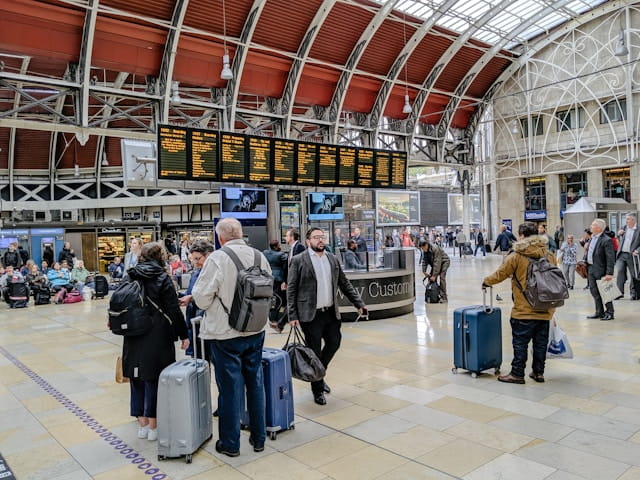
A photo of travel}}

Spanish Travel Vocabulary

Start with the most common words, then expand your knowledge with intermediate and advanced vocabulary.

Beginner (A1)

  • airport el aeropuerto
  • seat el asiento
  • bus el autobús
  • airplane el avión
  • ticket el billete
  • destination el destino
  • luggage el equipaje
  • hotel el hotel
  • map el mapa
  • subway el metro
  • passenger el pasajero/la pasajera
  • passport el pasaporte
  • taxi el taxi
  • train el tren
  • tourist el turista/la turista
  • trip el viaje
  • flight el vuelo
  • station la estación
  • island la isla
  • arrival la llegada
  • suitcase la maleta
  • backpack la mochila
  • beach la playa
  • departure la salida
  • vacation las vacaciones

Elementary (A2)

  • accommodation el alojamiento
  • car rental el alquiler de coches
  • platform el andén
  • ship el barco
  • exchange el cambio
  • camping el camping
  • check-in el check-in
  • check-out el check-out
  • carry-on el equipaje de mano
  • guide el guía/la guía
  • schedule el horario
  • hostel el hostal
  • monument el monumento
  • motel el motel
  • aisle el pasillo
  • port el puerto
  • souvenir el recuerdo
  • delay el retraso
  • sightseeing la visita turística
  • visitor el visitante/la visitante
  • attraction la atracción
  • highway la carretera
  • emergency la emergencia
  • guidebook la guía
  • currency la moneda
  • guesthouse la pensión
  • gate la puerta
  • baggage claim la recogida de equipajes
  • reservation la reserva
  • route la ruta
  • waiting room la sala de espera
  • ticket office la taquilla
  • boarding pass la tarjeta de embarque
  • terminal la terminal
  • tent la tienda de campaña
  • window (airplane) la ventanilla

Intermediate & Advanced (B1-C1)

  • travel agent el agente de viajes/la agente de viajes
  • youth hostel el albergue juvenil
  • hitchhiking el autostop
  • flight attendant el auxiliar de vuelo/la auxiliar de vuelo
  • first aid el botiquín
  • cabin (ship) el camarote
  • captain el capitán/la capitana
  • cruise el crucero
  • ferry el ferry
  • itinerary el itinerario
  • landscape el paisaje
  • pilot el piloto/la pilota
  • tour el tour
  • sleeping bag el saco de dormir
  • travel insurance el seguro de viaje
  • visa el visado
  • rest area el área de descanso
  • customs la aduana
  • camper van la autocaravana
  • compass la brújula
  • cancellation la cancelación
  • excursion la excursión
  • border la frontera
  • lost and found la oficina de objetos perdidos
  • security la seguridad
  • consulate el consulado
  • deck (ship) la cubierta
  • embassy la embajada
  • immigration la inmigración
  • crew la tripulación

Practice What You've Learned

Review your Spanish travel vocabulary and test your knowledge with interactive practice.

Ready to take the quiz?

Put your new travel vocabulary into practice and see how many words you can remember.

Take the quiz

Practice with flashcards

Review Spanish travel vocabulary and strengthen your memory with interactive flashcards.

Open flashcards

Example Sentences

In proper context. With highlighted verbs and adjectives.

Beginner & Elementary (A1-A2)

Learn basic travel phrases with clear verbs and adjectives.

  • El turista viaja en autobús por la ciudad. The tourist travels by bus through the city.
  • Ella reserva una habitación en el hotel. She reserves a room at the hotel.
  • El tren llega a la estación a las ocho. The train arrives at the station at eight o'clock.
  • El avión sale de la terminal a mediodía. The plane departs from the terminal at noon.
  • Mi hermano compra un billete para el metro. My brother buys a ticket for the subway.
  • El asiento de la ventana es muy cómodo. The window seat is very comfortable.
  • Ese hotel frente a la playa es muy barato. That hotel in front of the beach is very cheap.
  • El tren rápido es una opción muy segura. The high-speed train is a very safe option.
  • Mi maleta para el viaje es bastante grande. My suitcase for the trip is quite big.
  • La guía turística es muy útil para la visita. The guidebook is very useful for the visit.

Intermediate & Advanced (B1-C1)

Master complex travel scenarios and expressive descriptions.

  • El piloto anuncia un ligero retraso antes del despegue. The pilot announces a slight delay before takeoff.
  • Los pasajeros esperan pacientemente en la sala de embarque. The passengers wait patiently in the boarding lounge.
  • Nosotros planificamos un itinerario detallado para la excursión. We planned a detailed itinerary for the excursion.
  • La agencia de viajes gestionó los visados necesarios para la aduana. The travel agency managed the necessary visas for customs.
  • El crucero navega hacia un puerto histórico del Caribe. The cruise ship sails toward a historic Caribbean port.
  • El paisaje de la montaña parece completamente impresionante. The mountain landscape looks completely impressive.
  • El vuelo internacional fue bastante turbulento debido a la tormenta. The international flight was quite turbulent due to the storm.
  • El agente fronterizo se mostró siempre amable durante la inspección. The border agent was always polite during the inspection.
  • Preferimos un alojamiento tranquilo lejos del centro turístico. We prefer quiet accommodation away from the tourist center.
  • La tripulación del barco se mantuvo siempre atenta a los pasajeros. The ship's crew remained constantly attentive to the passengers.

Frequently Asked Questions

Frequently Asked Questions about Spanish Travel Vocabulary

Knowing how to navigate a city is essential for any traveler. Here are key phrases for asking where places are located:

  • ¿Dónde está...? – Where is...?
  • ¿Cómo llego a...? – How do I get to...?
  • ¿Está lejos o cerca? – Is it far or close?
  • Disculpe, ¿dónde queda la estación de metro más cercana? – Excuse me, where is the nearest subway station?

Spanish regional terms for tickets vary depending on where you travel:

  • El billete: Used predominantly in Spain for train, bus, plane, or event tickets (e.g., un billete de tren).
  • El boleto: Most common in Mexico, Central America, and parts of South America for transport and events.
  • El pasaje: Widely used across Latin America specifically for transportation fares (flight, bus, boat ticket).

When arriving at your accommodation, these useful phrases will help you check in smoothly:

  • Tengo una reserva a nombre de... – I have a reservation under the name of...
  • ¿A qué hora es el check-in / check-out? – What time is check-in / check-out?
  • ¿El desayuno está incluido? – Is breakfast included?
  • ¿Me puede dar la llave de la habitación? – Can you give me the room key?

Mastering a few core verbs will help you explain your travel plans and movements:

  • Viajar: To travel (e.g., Me gusta viajar en avión.)
  • Volar: To fly (e.g., El avión vuela directamente a Madrid.)
  • Facturar: To check in baggage (e.g., Debemos facturar las maletas.)
  • Hacer la maleta: To pack a suitcase (e.g., Tengo que hacer la maleta esta noche.)

Navigating airport processes requires specific terms and expressions:

  • El control de seguridad: Security checkpoint (e.g., Quítese el cinturón en el control de seguridad.)
  • La tarjeta de embarque: Boarding pass (e.g., Muestre su tarjeta de embarque y pasaporte.)
  • La aduana: Customs (e.g., ¿Tiene algo que declarar en la aduana?)
  • La puerta de embarque: Boarding gate (e.g., La puerta de embarque cambia a las tres.)

Explore All Spanish Lessons

Browse all Spanish vocabulary lessons, quizzes, grammar guides, and learning resources.

Browse All Lessons

Photo by Tomek Baginski on Unsplash