Vocabulary Lesson

French Animals Vocabulary

In this short lesson, you'll master essential animals vocabulary in French. After learning the words, use the flashcards or quiz to reinforce your knowledge.
A1-C1 Audio Included Quiz Flashcards
A photo of animals}}

French Animals Vocabulary

Start with the most common words, then expand your knowledge with intermediate and advanced vocabulary.

Beginner (A1)

  • animal l'animal
  • bird l'oiseau
  • chicken la poule
  • mouse la souris
  • cow la vache
  • duck le canard
  • cat le chat
  • horse le cheval
  • dog le chien
  • pig le cochon
  • rabbit le lapin
  • sheep le mouton
  • fish le poisson

Elementary (A2)

  • bee l'abeille
  • spider l'araignée
  • insect l'insecte
  • goose l'oie
  • bear l'ours
  • donkey l'âne
  • squirrel l'écureuil
  • elephant l'éléphant
  • owl la chouette
  • goat la chèvre
  • frog la grenouille
  • turtle la tortue
  • rooster le coq
  • crab le crabe
  • lion le lion
  • wolf le loup
  • lizard le lézard
  • panda le panda
  • butterfly le papillon
  • parrot le perroquet
  • pigeon le pigeon
  • rat le rat
  • fox le renard
  • snake le serpent
  • monkey le singe
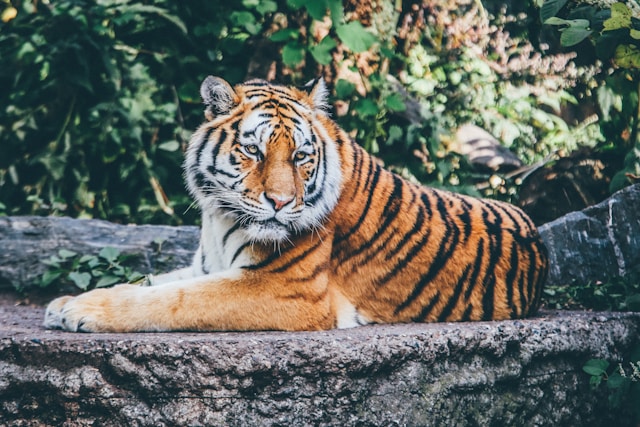
  • tiger le tigre

Intermediate & Advanced (B1-C1)

  • eagle l'aigle
  • ostrich l'autruche
  • swallow l'hirondelle
  • starfish l'étoile de mer
  • whale la baleine
  • bat la chauve-souris
  • shrimp la crevette
  • giraffe la girafe
  • jellyfish la méduse
  • squid le calmar
  • beaver le castor
  • deer le cerf
  • camel le chameau
  • raven le corbeau
  • toad le crapaud
  • crocodile le crocodile
  • swan le cygne
  • dolphin le dauphin
  • turkey le dindon
  • hawk le faucon
  • gorilla le gorille
  • lobster le homard
  • hedgehog le hérisson
  • kangaroo le kangourou
  • koala le koala
  • leopard le léopard
  • penguin le manchot
  • sparrow le moineau
  • seal le phoque
  • octopus le poulpe
  • reindeer le renne
  • shark le requin
  • zebra le zèbre
  • antelope l'antilope
  • hippopotamus l'hippopotame
  • moose l'élan
  • hyena la hyène
  • otter la loutre
  • panther la panthère
  • salamander la salamandre
  • badger le blaireau
  • buffalo le buffle
  • chimpanzee le chimpanzé
  • flamingo le flamant
  • heron le héron
  • walrus le morse
  • peacock le paon
  • sloth le paresseux
  • porcupine le porc-épic
  • pelican le pélican
  • rhinoceros le rhinocéros
  • vulture le vautour
  • mongoose la mangouste

Practice What You've Learned

Review your French animals vocabulary and test your knowledge with interactive practice.

Ready to take the quiz?

Put your new animals vocabulary into practice and see how many words you can remember.

Take the quiz

Practice with flashcards

Review French animals vocabulary and strengthen your memory with interactive flashcards.

Open flashcards

Example Sentences

In proper context. With highlighted verbs and adjectives.

Beginner & Elementary (A1-A2)

Basic sentences about animals with highlighted verbs and adjectives.

  • Le chat dort sur le canapé. The cat sleeps on the sofa.
  • Le poisson nage dans le grand bocal. The fish swims in the big bowl.
  • L'oiseau vole au-dessus du jardin. The bird flies above the garden.
  • Le lapin mange une carotte fraîche. The rabbit eats a fresh carrot.
  • Le chien court très vite dans le parc. The dog runs very fast in the park.
  • La souris est un tout petit animal. The mouse is a very small animal.
  • Le loup est un animal sauvage. The wolf is a wild animal.
  • Le mouvement de la tortue est très lent. The turtle's movement is very slow.
  • Je vois un beau cheval noir dans le pré. I see a beautiful black horse in the meadow.
  • L'araignée dans la maison n'est pas dangereuse. The spider in the house is not dangerous.

Intermediate & Advanced (B1-C1)

More complex sentences featuring animal behavior, traits, and habitats.

  • L'aigle chasse de petits rongeurs dans la montagne. The eagle hunts small rodents in the mountain.
  • Les baleines migrent vers des eaux plus chaudes en hiver. Whales migrate to warmer waters in winter.
  • Le lézard se camoufle parfaitement parmi les rochers. The lizard camouflages itself perfectly among the rocks.
  • Le lion rugit pour défendre son territoire. The lion roars to defend its territory.
  • Nous observons les dauphins depuis le pont du bateau. We are watching the dolphins from the deck of the boat.
  • Ce serpent venimeux vit dans les forêts tropicales. This venomous snake lives in tropical forests.
  • Le cerf majestueux avance silencieusement dans la forêt. The majestic deer steps silently through the forest.
  • Le renard est souvent un chasseur solitaire. The fox is often a solitary hunter.
  • La chouette est un oiseau nocturne très efficace. The owl is a very efficient nocturnal bird.
  • Le panda géant est une espèce menacée mais protégée. The giant panda is a threatened but protected species.

Frequently Asked Questions

Frequently asked questions about French animal vocabulary, idioms, and usage.

In French, animal sounds are written differently than in English. Here are some of the most common French animal noise verbs and sounds:

  • Le chien : "ouaf ouaf" (le chien aboie)
  • Le chat : "miaou" (le chat miaule)
  • Le coq : "cocorico" (le coq chante)
  • La vache : "meuh" (la vache meugle)
  • La grenouille : "coâ coâ" (la grenouille coasse)

Many common animals have distinct noun forms for the male, female, and baby:

  • Horse : le cheval (male/general), la jument (female), le poulain (foal)
  • Dog : le chien (male), la chienne (female), le chiot (puppy)
  • Cat : le chat (male), la chatte (female), le chaton (kitten)
  • Cow / Bull : le taureau (bull), la vache (cow), le veau (calf)
  • Sheep : le bélier (ram), la brebis (ewe), l'agneau (lamb)

French uses animals in many idiomatic expressions that do not translate literally:

  • Avoir un chat dans la gorge : to have a frog in one's throat (to be hoarse)
  • Poser un lapin : to stand someone up
  • Avoir la chair de poule : to have goosebumps
  • Quand les poules auront des dents : when pigs fly (literally: when chickens have teeth)
  • Faire un froid de canard : to be freezing cold outside

When discussing animal behavior, these verbs are frequently used in French:

  • Chasser : to hunt (e.g., le loup chasse en meute)
  • Hiberner : to hibernate during winter
  • Voler : to fly through the air
  • Grimper : to climb (e.g., l'écureuil grimpe aux arbres)
  • Pondre : to lay eggs (e.g., la poule pond un œuf)

Describing animals requires correct gender and number agreement with the noun:

  • Sauvage vs. Domestique : wild vs. domestic (un animal sauvage)
  • Inoffensif vs. Venimeux / Dangereux : harmless vs. venomous / dangerous
  • Mammifère / Aquatique / Nocturne : mammalian / aquatic / nocturnal
  • Féroce / Rapide / Agile : fierce / fast / agile
  • À poils / À plumes : hairy/furry / feathered

Explore All French Lessons

Browse all French vocabulary lessons, quizzes, grammar guides, and learning resources.

Browse All Lessons

Photo by Nick Karvounis on Unsplash