Vocabulary Lesson

French Clothes Vocabulary

In this short lesson, you'll master essential clothes vocabulary in French. After learning the words, use the flashcards or quiz to reinforce your knowledge.
A1-C1 Audio Included Quiz Flashcards
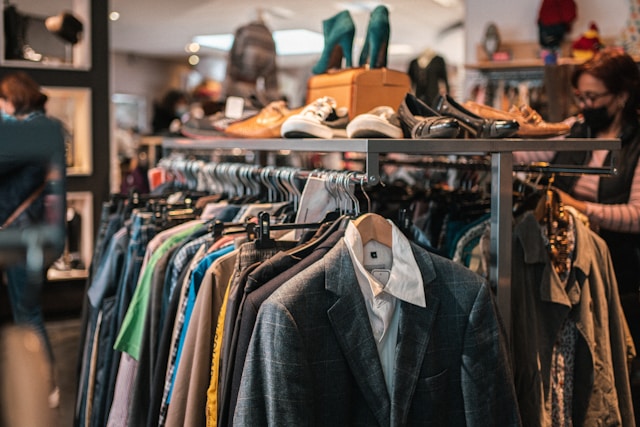
A photo of clothes}}

French Clothes Vocabulary

Start with the most common words, then expand your knowledge with intermediate and advanced vocabulary.

Beginner (A1)

  • blouse la blouse
  • boot la botte
  • cap la casquette
  • belt la ceinture
  • sock la chaussette
  • shoe la chaussure
  • shirt la chemise
  • tie la cravate
  • scarf l'écharpe
  • skirt la jupe
  • slippers les pantoufles
  • pocket la poche
  • dress la robe
  • sandal la sandale
  • jacket la veste
  • bikini le bikini
  • hat le chapeau
  • suit le costume
  • gloves les gants
  • jeans le jean
  • swimsuit le maillot de bain
  • coat le manteau
  • handkerchief le mouchoir
  • pants le pantalon
  • polo shirt le polo
  • sweater le pull
  • pajamas le pyjama
  • shorts les shorts
  • T-shirt le tee-shirt

Elementary (A2)

  • raincoat l'imperméable
  • nightgown la chemise de nuit
  • panties la culotte
  • zipper la fermeture éclair
  • sleeve la manche
  • bathrobe la robe de chambre
  • overalls la salopette
  • headband le bandeau
  • beanie le bonnet
  • beret le béret
  • boxer shorts le caleçon
  • collar le col
  • turtleneck le col roulé
  • tights les collants
  • windbreaker le coupe-vent
  • tank top le débardeur
  • scarf (lightweight) le foulard
  • cardigan le gilet
  • kimono le kimono
  • one-piece swimsuit le maillot une pièce
  • bow tie le nœud papillon
  • parka le parka
  • underpants le slip
  • underwear le sous-vêtement
  • bra le soutien-gorge
  • hoodie le sweat à capuche
  • high heels les escarpins
  • loafers les mocassins
  • flip-flops les tongs

Intermediate & Advanced (B1-C1)

  • housecoat la robe d'intérieur
  • stockings les bas
  • suspenders les bretelles

Practice What You've Learned

Review your French clothes vocabulary and test your knowledge with interactive practice.

Ready to take the quiz?

Put your new clothes vocabulary into practice and see how many words you can remember.

Take the quiz

Practice with flashcards

Review French clothes vocabulary and strengthen your memory with interactive flashcards.

Open flashcards

Example Sentences

In proper context. With highlighted verbs and adjectives.

Beginner & Elementary (A1-A2)

Simple French sentences featuring clothing vocabulary and everyday grammar.

  • Je porte une chemise bleue. I am wearing a blue shirt.
  • Elle met son manteau chaud. She puts on her warm coat.
  • Nous achetons des chaussettes plates. We are buying flat socks.
  • Il lave son pantalon noir. He is washing his black pants.
  • Vous enlevez vos chaussures sales. You take off your dirty shoes.
  • Ce chapeau est très grand. This hat is very big.
  • La jupe rouge est courte. The red skirt is short.
  • Ces bottes sont neuves. These boots are brand new.
  • Mon pull vert est doux. My green sweater is soft.
  • La robe blanche est propre. The white dress is clean.

Intermediate & Advanced (B1-C1)

More complex sentence structures with clothing vocabulary.

  • Il défait rapidement la fermeture éclair de son manteau. He quickly unzips his coat zipper.
  • Elle ajuste la ceinture de sa robe élégante. She adjusts the belt of her elegant dress.
  • Nous boutonnons soigneusement nos vestes avant de sortir dans le froid. We carefully button up our jackets before going out into the cold.
  • Tu repasses cette chemise en coton avant la réunion. You iron this cotton shirt before the meeting.
  • Les stylistes associent ce foulard en soie avec un costume moderne. Stylists match this silk scarf with a modern suit.
  • Ce manteau d'hiver reste particulièrement imperméable sous la pluie forte. This winter coat stays particularly waterproof in heavy rain.
  • Cette veste en laine semble très confortable pendant l'automne. This wool jacket seems very comfortable during autumn.
  • Ses souliers vernis sont trop serrés pour marcher longtemps. His patent leather shoes are too tight for walking long distances.
  • Elle préfère porter des vêtements amples durant les chaudes journées d'été. She prefers wearing loose clothing during hot summer days.
  • Ce bonnet en maille tricotée est extrêmement chaud. This knitted beanie is extremely warm.

Frequently Asked Questions

Frequently asked questions about French clothing vocabulary and usage.

French uses specific verbs depending on whether you are describing the action of putting on clothes or the state of wearing them:

  • Mettre: Means 'to put on'. Example: Je mets mon manteau (I'm putting on my coat).
  • Porter: Means 'to wear'. Example: Il porte une chemise blanche (He is wearing a white shirt).
  • S'habiller: Means 'to get dressed'. Example: Elle s'habille rapidement le matin (She gets dressed quickly in the morning).
  • Enlever or Ôter: Means 'to take off'. Example: Enlève tes chaussures sales (Take off your dirty shoes).

The French language distinguishes between clothing sizes and shoe sizes using two different words:

  • La taille: Used for clothing size. Ask: Quelle est votre taille ? or Tu fais quelle taille ?
  • La pointure: Used exclusively for shoe size. Ask: Quelle est votre pointure ? or Tu fais du combien ?
  • To answer, use faire du: Je fais du 38 (I am a size 38).

Grammatical agreement with clothing and color adjectives follows specific rules:

  • Standard color adjectives agree in gender and number with the noun: une veste noire, des pantalons bleus.
  • Compound colors or colors derived from real objects (fruits, minerals) remain invariable: des t-shirts marron, des robes bleu marine.
  • Placement: Color adjectives always come after the clothing noun (e.g., un chapeau rouge).

While all three are upper-body garments worn for warmth, they refer to distinct styles in French:

  • Un pull (short for pullover): A knitted sweater without a front opening.
  • Un gilet: A cardigan or vest, usually open at the front with buttons or a zip.
  • Un sweat à capuche: A hooded sweatshirt or casual hoodie.

Yes, everyday clothing terms vary significantly between France and Quebec:

  • In France, 'sweater' is un pull, whereas in Quebec it is often called un chandail.
  • In France, 'socks' are des chaussettes, while in Quebec long socks might be called des bas.
  • In France, a winter beanie is un bonnet, but in Quebec it is known as une tuque.

Explore All French Lessons

Browse all French vocabulary lessons, quizzes, grammar guides, and learning resources.

Browse All Lessons

Photo by Hugo Clément on Unsplash