Vocabulary Lesson

Italian Fruits Vocabulary

In this short lesson, you'll master essential fruits vocabulary in Italian. After learning the words, use the flashcards or quiz to reinforce your knowledge.
A1-C1 Audio Included Quiz Flashcards
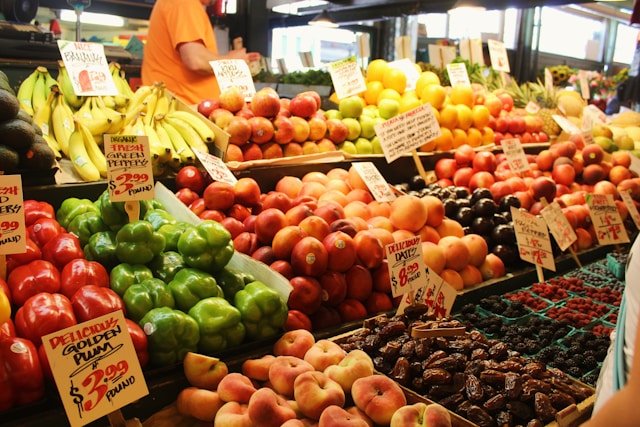
A photo of fruits

Italian Fruits Vocabulary

Start with the most common words, then expand your knowledge with intermediate and advanced vocabulary.

Beginner (A1)

  • lemon il limone
  • melon il melone
  • watermelon l'anguria
  • orange l'arancia
  • grape l'uva
  • banana la banana
  • cherry la ciliegia
  • strawberry la fragola
  • apple la mela
  • pear la pera
  • peach la pesca
  • plum la prugna

Elementary (A2)

  • coconut il cocco
  • fig il fico
  • kiwi il kiwi
  • raspberry il lampone
  • mandarin il mandarino
  • apricot l'albicocca
  • pineapple l'ananas
  • raisin l'uva passa
  • berry la bacca
  • clementine la clementina
  • lime la limetta
  • prune la prugna secca

Intermediate & Advanced (B1-C1)

  • date il dattero
  • tangerine il mandarancio
  • mango il mango
  • pomegranate il melograno
  • cantaloupe il melone cantalupo
  • honeydew melon il melone giallo
  • blueberry il mirtillo
  • grapefruit il pompelmo
  • citrus fruit l'agrume
  • avocado l'avocado
  • wild strawberry la fragolina di bosco
  • blackberry la mora
  • nectarine la nettarina
  • persimmon il caco
  • quince il cotogno
  • dragon fruit il frutto del drago
  • passion fruit il frutto della passione
  • kumquat il kumquat
  • lychee il litchi
  • bilberry il mirtillo nero
  • cranberry il mirtillo rosso
  • plantain il platano
  • pomelo il pomelo
  • currant il ribes
  • tamarind il tamarindo
  • gooseberry l'uva spina
  • juniper berry la bacca di ginepro
  • goji berry la bacca di goji
  • star fruit la carambola
  • feijoa la feijoa
  • guava la guava
  • mulberry la mora di gelso
  • papaya la papaia
  • barberry il crespino
  • breadfruit il frutto dell'albero del pane
  • soursop il guanabana
  • longan il longan
  • loquat il nespolo
  • rambutan il rambutan
  • sea buckthorn l'olivello spinoso
  • elderberry la bacca di sambuco
  • cloudberry la mora artica
  • medlar la nespola
  • rowanberry la sorba
  • durian il durian
  • jackfruit il giaco

Practice What You've Learned

Review your Italian fruits vocabulary and test your knowledge with interactive practice.

Ready to take the quiz?

Put your new fruits vocabulary into practice and see how many words you can remember.

Take the quiz

Practice with flashcards

Review Italian fruits vocabulary and strengthen your memory with interactive flashcards.

Open flashcards

Example Sentences

In proper context. With highlighted verbs and adjectives.

Beginner & Elementary (A1-A2)

Essential verbs and adjectives for describing everyday fruits and buying fruit.

  • Marco compra una mela rossa al mercato. Marco buys a red apple at the market.
  • Giulia morde una fragola dolce. Giulia bites a sweet strawberry.
  • Il cuoco taglia una pera fresca sul tagliere. The chef cuts a fresh pear on the cutting board.
  • Il bambino mangia la banana dopo la scuola. The child eats the banana after school.
  • Io lavo la ciliegia prima di mangiarla. I wash the cherry before eating it.
  • Questa pesca è molto matura. This peach is very ripe.
  • L'arancia di Sicilia è davvero dolce. The Sicilian orange is really sweet.
  • Il limone verde è ancora acerbo. The green lemon is still unripe.
  • Preferisco mangiare una prugna fresca. I prefer to eat a fresh plum.
  • L'anguria estiva è davvero succosa. The summer watermelon is really juicy.

Intermediate & Advanced (B1-C1)

More complex sentence structures incorporating kitchen preparation and subtle fruit characteristics.

  • Mia nonna spreme un pompelmo ogni mattina a colazione. My grandmother squeezes a grapefruit every morning at breakfast.
  • Il cuoco sbuccia un mango maturo prima di affettarlo. The chef peels a ripe mango before slicing it.
  • Noi conserviamo l'uva passa in un barattolo di vetro chiuso. We store the raisins in a sealed glass jar.
  • L'agricoltore raccoglie i fichi direttamente dall'albero in estate. The farmer picks the figs directly from the tree in summer.
  • Maria frulla i mirtilli rossi insieme al latte d'avena. Maria blends the cranberries together with oat milk.
  • Il frutto della passione possiede un aroma decisamente esotico. Passion fruit possesses a decidedly exotic aroma.
  • Questo ribes rosso ha un gusto piacevolmente aspro. This red currant has a pleasantly tart taste.
  • Il melone cantalupo sul tavolo è straordinariamente profumato. The cantaloupe on the table is extraordinarily fragrant.
  • I datteri secchi sono apprezzati per il loro sapore zuccherino. Dried dates are valued for their sugary flavor.
  • La fragolina di bosco è un delizioso frutto selvatico. The wild strawberry is a delicious wild fruit.

Frequently Asked Questions

Essential rules, regional variations, and helpful vocabulary for discussing fruits in Italian.

In Italian, there is a clear rule distinguishing the fruit from the tree that bears it:

  • Fruits are typically feminine (ending in -a): la mela (apple), la pera (pear), la pesca (peach), la prugna (plum).
  • Fruit trees are typically masculine (ending in -o): il melo (apple tree), il pero (pear tree), il pesco (peach tree), il prugno (plum tree).
  • Exceptions: Some fruits are masculine and share their name with the tree, such as il limone (lemon/lemon tree), il dattero (date/date palm), and il fico (fig/fig tree).

Both translate to 'fruit' in English, but they are used in different context:

  • La frutta is a collective feminine singular noun referring to fruit as a food category (e.g., Voglio mangiare della frutta — I want to eat some fruit).
  • I frutti is the masculine plural of il frutto, used when counting individual fruits, botanical fruit units, or figurative fruits (e.g., i frutti del lavoro — the fruits of labor).

Watermelon is one of the most famous examples of regional vocabulary variations across Italy:

  • In Northern Italy, standard usage favors l'anguria.
  • In Central Italy (especially Tuscany and Lazio), it is called il cocomero.
  • In Southern Italy (such as Campania and Sicily), it is often referred to as il mellone d'acqua or u meluni.

Here are essential verbs you need when handling fruits in the kitchen:

  • Sbucciare: to peel (e.g., sbucciare una banana).
  • Spremere: to squeeze / extract juice (e.g., spremere un limone).
  • Tagliare a spicchi: to cut into wedges/slices (e.g., tagliare l'arancia a spicchi).
  • Frullare: to blend / make a smoothie (e.g., frullare le fragole).

Useful adjectives for talking about fruit condition and flavor profile include:

  • Maturo / Matura: ripe (ready to eat).
  • Acerbo / Acerba: unripe or green.
  • Dolce: sweet.
  • Aspro / Aspra or Acido / Acida: tart or sour.
  • Succoso / Succosa: juicy.

Explore All Italian Lessons

Browse all Italian vocabulary lessons, quizzes, grammar guides, and learning resources.

Browse All Lessons

Photo by Melissa Askew on Unsplash