Vocabulary Lesson

Spanish Food Vocabulary

In this short lesson, you'll master essential food vocabulary in Spanish. After learning the words, use the flashcards or quiz to reinforce your knowledge.
A1-C1 Audio Included Quiz Flashcards
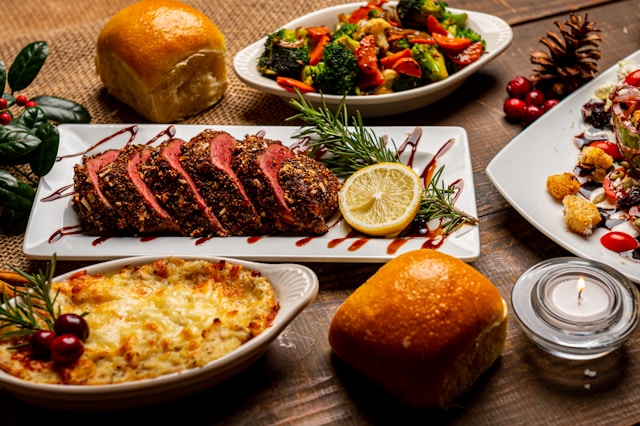
Assortment of foods for Spanish food vocabulary lesson

Spanish Food Vocabulary

Start with the most common words, then expand your knowledge with intermediate and advanced vocabulary.

Beginner (A1)

  • salt la sal
  • pepper la pimienta
  • sugar el azúcar
  • oil el aceite
  • olive oil el aceite de oliva
  • chicken el pollo
  • beef la carne de vaca
  • pork el cerdo
  • fish el pescado
  • egg el huevo
  • ham el jamón
  • milk la leche
  • cheese el queso
  • butter la mantequilla
  • yogurt el yogur
  • bread el pan
  • toast la tostada
  • rice el arroz
  • pasta la pasta
  • cereal los cereales
  • sandwich el sándwich
  • cookie la galleta
  • cake el pastel
  • chocolate el chocolate
  • beans los frijoles
  • ketchup el kétchup
  • mustard la mostaza
  • mayonnaise la mayonesa
  • honey la miel

Elementary (A2)

  • bacon el tocino
  • sausage la salchicha
  • turkey el pavo
  • steak el filete
  • salmon el salmón
  • tuna el atún
  • cream la crema
  • ice cream el helado
  • flour la harina
  • oatmeal la avena
  • lentils las lentejas
  • chickpeas los garbanzos
  • peas los guisantes
  • peanuts los cacahuetes
  • almonds las almendras
  • sauce la salsa
  • jam la mermelada

Intermediate & Advanced (B1-C1)

  • lamb el cordero
  • shrimp el camarón
  • cod el bacalao
  • crab el cangrejo
  • lobster la langosta
  • walnuts las nueces
  • pistachios los pistachos
  • hazelnuts las avellanas
  • parsley el perejil
  • basil la albahaca
  • thyme el tomillo
  • ginger el jengibre
  • cinnamon la canela
  • vanilla la vainilla
  • vinegar el vinagre
  • quinoa la quinoa
  • barley la cebada
  • couscous el cuscús

Practice What You've Learned

Review your Spanish food vocabulary and test your knowledge with interactive practice.

Ready to take the quiz?

Put your new food vocabulary into practice and see how many words you can remember.

Take the quiz

Practice with flashcards

Review Spanish food vocabulary and strengthen your memory with interactive flashcards.

Open flashcards

Example Sentences

In the context of a market. With highlighted verbs and adjectives.

Beginner & Elementary (A1-A2)

Everyday food conversations using basic A1/A2 food vocabulary.

  • Yo como pan con queso por la mañana. I eat bread with cheese in the morning.
  • Yo quiero pollo con arroz, por favor. I want chicken with rice, please.
  • Mi madre prepara pasta con salsa. My mother prepares pasta with sauce.
  • Yo necesito leche y huevos para la receta. I need milk and eggs for the recipe.
  • Nosotros compramos aceite de oliva en el supermercado. We buy olive oil at the supermarket.
  • El queso es fresco. The cheese is fresh.
  • El chocolate es dulce. The chocolate is sweet.
  • El pan está caliente. The bread is hot.
  • La miel es natural. Honey is natural.
  • El helado está delicioso. The ice cream is delicious.

Intermediate & Advanced (B1-C1)

Restaurant and cooking conversations using intermediate and advanced food vocabulary.

  • El chef añadió jengibre porque quería darle más sabor al plato. The chef added ginger because he wanted to give the dish more flavor.
  • Yo prefiero el salmón al horno porque es más saludable. I prefer baked salmon because it is healthier.
  • El restaurante sirve mariscos frescos durante todo el año. The restaurant serves fresh seafood all year round.
  • El cocinero mezcló las especias antes de preparar la carne. The cook mixed the spices before preparing the meat.
  • Nosotros probamos un plato con cordero y hierbas locales. We tried a dish with lamb and local herbs.
  • El bacalao es tradicional en muchas regiones de España. Cod is traditional in many regions of Spain.
  • La salsa tiene un sabor intenso que combina bien con la pasta. The sauce has an intense flavor that goes well with pasta.
  • Los pistachos son populares en muchos postres modernos. Pistachios are popular in many modern desserts.
  • La vainilla es común en recetas de repostería tradicional. Vanilla is common in traditional baking recipes.
  • El vinagre tiene un sabor fuerte pero equilibrado. Vinegar has a strong but balanced flavor.

Frequently Asked Questions

Essential tips on ordering food, regional vocabulary differences, describing flavors, and using Spanish food expressions.

When ordering food in Spanish restaurants, these expressions will help you ask for dishes, make choices, and communicate politely with staff:

  • Quiero... (I want...) — A simple and common way to order. Example: Quiero pollo con arroz. (I want chicken with rice.)
  • Quisiera... (I would like...) — A polite way to order. Example: Quisiera pescado, por favor. (I would like fish, please.)
  • Me gustaría... (I would like...) — A more formal expression. Example: Me gustaría probar la pasta. (I would like to try the pasta.)
  • Para mí... (For me...) — Used when ordering with other people. Example: Para mí, pollo con arroz. (For me, chicken with rice.)
  • ¿Qué recomienda? (What do you recommend?) — Useful when asking the waiter for suggestions.
  • ¿Qué lleva? (What does it contain?) — Used to ask about ingredients. Example: ¿Qué lleva esta salsa? (What does this sauce contain?)
  • Sin... (Without...) — Used to remove ingredients. Example: Pollo sin salsa. (Chicken without sauce.)
  • Con... (With...) — Used to add ingredients. Example: Arroz con queso. (Rice with cheese.)
  • La cuenta, por favor. (The bill, please.) — A common phrase when finishing a meal.

Spanish uses different expressions for ordering amounts of food in restaurants, shops, and supermarkets:

  • Una porción de... (A portion of...) — Una porción de pastel = A slice of cake.
  • Un trozo de... (A piece of...) — Un trozo de queso = A piece of cheese.
  • Un poco de... (A little of...) — Un poco de miel = A little honey.
  • Un kilo de... (A kilogram of...) — Common when buying food at markets. Example: Un kilo de arroz.
  • Medio kilo de... (Half a kilogram of...) — Used for shopping quantities.
  • Una docena de... (A dozen of...) — Common for eggs. Example: Una docena de huevos.

Food words can change depending on the Spanish-speaking country. These are some of the most common regional differences learners encounter:

  • Beans: In Mexico and many Central American countries, frijoles is common. In Spain, judías or alubias are more common.
  • Peanuts: In Spain, people usually say cacahuetes, while in Argentina, Chile, Peru, and other Latin American countries, maní is more common.
  • Shrimp: In Mexico and many Latin American countries, camarón is common. In Spain, you will often hear gamba or langostino.
  • Cake: In Spain, pastel or tarta are common. In Mexico, pastel is widely used, while in Argentina and Chile, torta is often used.
  • Ice cream: Helado is used throughout the Spanish-speaking world.

These adjectives help you describe taste, quality, and texture when talking about food:

  • Dulce: Sweet — El chocolate es dulce. (The chocolate is sweet.)
  • Salado/a: Salty — La comida está salada. (The food is salty.)
  • Fresco/a: Fresh — El queso es fresco. (The cheese is fresh.)
  • Delicioso/a: Delicious — El pastel está delicioso. (The cake is delicious.)
  • Fuerte: Strong — El sabor del vinagre es fuerte. (The vinegar flavor is strong.)
  • Suave: Mild or soft — El queso tiene un sabor suave. (The cheese has a mild flavor.)
  • Picante: Spicy — La salsa es picante. (The sauce is spicy.)

These verbs are useful for understanding recipes, cooking conversations, and food descriptions:

  • Comer: To eat — Me gusta comer pasta. (I like eating pasta.)
  • Cocinar: To cook — Mi padre cocina arroz. (My father cooks rice.)
  • Preparar: To prepare — Preparo una ensalada. (I prepare a salad.)
  • Añadir: To add — Añade sal a la sopa. (Add salt to the soup.)
  • Mezclar: To mix — Mezcla los ingredientes. (Mix the ingredients.)
  • Probar: To try/taste — Quiero probar este plato. (I want to try this dish.)
  • Servir: To serve — El restaurante sirve pescado. (The restaurant serves fish.)

Explore All Spanish Lessons

Browse all Spanish vocabulary lessons, quizzes, grammar guides, and learning resources.

Browse All Lessons


Photo by Jed Owen on Unsplash