Vocabulary Quiz
Spanish Travel Quiz
Test your knowledge of Spanish travel vocabulary with this interactive quiz. Choose the correct answers and check how well you remember.
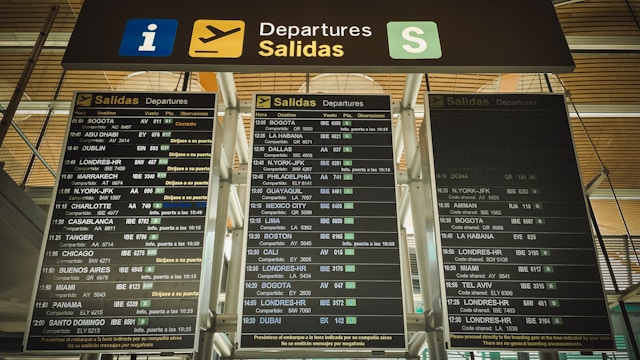
Test your knowledge of Spanish travel vocabulary with this interactive quiz. Choose the correct answers and check how well you remember.
Review your Spanish travel vocabulary and keep your knowledge fresh.
Refresh your memory with a quick review of essential words.
Review Spanish travel vocabulary and strengthen your memory with interactive flashcards.
See how travel vocabulary is used in everyday life, routines, and general daily conversations.
Test your understanding of beginner travel vocabulary.
| Audio | Spanish | English Translation |
|---|---|---|
| Tengo que comprar un billete en la taquilla de la estación. | I have to buy a ticket at the station's ticket office. | |
| Los pasajeros están esperando el autobús hacia el aeropuerto. | The passengers are waiting for the bus to the airport. | |
| Necesito mostrar mi pasaporte y la tarjeta de embarque en la puerta. | I need to show my passport and boarding pass at the gate. | |
| Mi maleta está sobre la cama del hotel. | My suitcase is on top of the hotel bed. | |
| Tomamos un taxi para ir a la playa por la mañana. | We take a taxi to go to the beach in the morning. |
Test your understanding of intermediate travel vocabulary.
| Audio | Spanish | English Translation |
|---|---|---|
| El piloto nos informó de que el vuelo sufriría un pequeño retraso. | The pilot informed us that the flight would suffer a short delay. | |
| Pasamos por la aduana sin ningún problema con nuestro equipaje. | We went through customs without any problem with our luggage. | |
| El itinerario del crucero incluye varias paradas en islas mediterráneas. | The cruise itinerary includes several stops at Mediterranean islands. | |
| Debes acudir a la oficina de objetos perdidos si buscas tu mochila. | You should go to the lost and found office if you are looking for your backpack. | |
| La tripulación del barco garantizó la seguridad durante toda la travesía. | The ship's crew guaranteed safety throughout the journey. |
Discover the proven learning benefits of interactive testing for mastering Spanish fruit names and expanding your fluency.
Forcing your brain to retrieve Spanish words from memory strengthens neural pathways far more effectively than passive reading or listening.
Immediate correctness checks prevent the fossilization of errors, allowing you to instantly correct spelling, gender, and translation mistakes.
Testing across Easy, Medium, and Hard CEFR levels lets you target your weak spots and systematically build long-term vocabulary retention.
Turning repetitive memorization into an interactive challenge boosts motivation, making daily practice enjoyable and consistent.
Continue expanding your Spanish vocabulary with these related lessons.
Browse all Spanish vocabulary lessons, quizzes, grammar guides, and learning resources.
Browse All Lessons