Vocabulary Lesson

German Food Vocabulary

In this short lesson, you'll master essential food vocabulary in German. After learning the words, use the flashcards or quiz to reinforce your knowledge.
A1-C1 Audio Included Quiz Flashcards
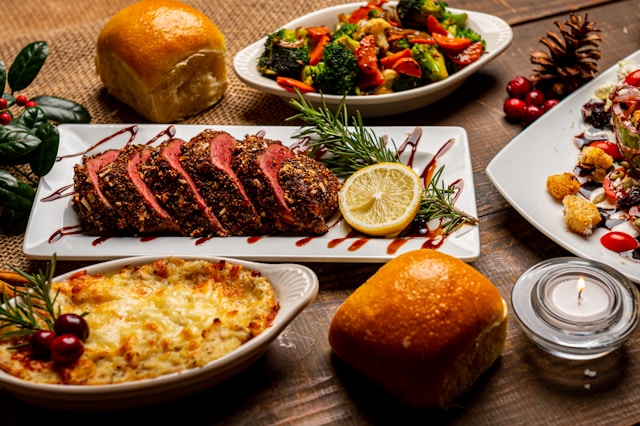
A photo of food

German Food Vocabulary

Start with the most common words, then expand your knowledge with intermediate and advanced vocabulary.

Beginner (A1)

  • bread das Brot
  • butter die Butter
  • cake der Kuchen
  • cheese der Käse
  • chicken das Hähnchen
  • chocolate die Schokolade
  • cookie der Keks
  • cream die Sahne
  • dessert das Dessert
  • egg das Ei
  • fish der Fisch
  • fruit das Obst
  • ham der Schinken
  • honey der Honig
  • bean die Bohne
  • ice cream das Eis
  • jam die Marmelade
  • meat das Fleisch
  • milk die Milch
  • muesli das Müsli
  • noodles die Nudeln
  • oil das Öl
  • pancake der Pfannkuchen
  • pasta die Pasta
  • pepper der Pfeffer
  • rice der Reis
  • salad der Salat
  • salt das Salz
  • sausage die Wurst
  • soup die Suppe
  • sugar der Zucker
  • vegetable das Gemüse
  • yogurt der Joghurt

Elementary (A2)

  • almond die Mandel
  • bacon der Speck
  • baking powder das Backpulver
  • beef das Rindfleisch
  • candy die Süßigkeiten
  • cinnamon der Zimt
  • cream cheese der Frischkäse
  • dough der Teig
  • flour das Mehl
  • hazelnut die Haselnuss
  • ketchup der Ketchup
  • margarine die Margarine
  • mayonnaise die Mayonnaise
  • mustard der Senf
  • nut die Nuss
  • olive oil das Olivenöl
  • pastry das Gebäck
  • peanut die Erdnuss
  • pork das Schweinefleisch
  • pretzel die Brezel
  • sour cream die saure Sahne
  • spice das Gewürz
  • tofu der Tofu
  • vanilla die Vanille
  • vinegar der Essig
  • waffle die Waffel
  • walnut die Walnuss

Intermediate & Advanced (B1-C1)

  • chickpea die Kichererbse
  • herb das Gewürzkraut
  • lentil die Linse
  • paprika (spice) das Paprikapulver
  • soybean die Sojabohne
  • yeast die Hefe
  • sunflower oil das Sonnenblumenöl

Practice What You've Learned

Review your German food vocabulary and test your knowledge with interactive practice.

Ready to take the quiz?

Put your new food vocabulary into practice and see how many words you can remember.

Take the quiz

Practice with flashcards

Review German food vocabulary and strengthen your memory with interactive flashcards.

Open flashcards

Example Sentences

In proper context. With highlighted verbs and adjectives.

Beginner & Elementary (A1-A2)

Fundamental verbs and adjectives used when talking about everyday food and meals.

  • Ich koche heute eine leckere Suppe. I am cooking a delicious soup today.
  • Er schneidet das Brot in dicke Scheiben. He is cutting the bread into thick slices.
  • Wir essen morgens gern Müsli mit Milch. We like to eat muesli with milk in the morning.
  • Sie backt am Wochenende einen frischen Kuchen. She is baking a fresh cake on the weekend.
  • Du kaufst Käse und Butter im Supermarkt. You buy cheese and butter at the supermarket.
  • Die Suppe ist sehr heiß. The soup is very hot.
  • Das Brotscheibchen schmeckt ganz frisch. The slice of bread tastes very fresh.
  • Der Salat ist wunderbar knackig. The salad is wonderfully crunchy.
  • Ich mag keinen scharfen Senf. I don't like spicy mustard.
  • Dieser Apfel schmeckt besonders süß. This apple tastes especially sweet.

Intermediate & Advanced (B1-C1)

More complex sentence structures featuring culinary verbs and descriptive adjectives.

  • Der Teig geht durch die Hefe langsam auf. The dough rises slowly because of the yeast.
  • Man würzt die Linsensuppe mit Pfeffer und Salz. One seasons the lentil soup with pepper and salt.
  • Sie brät das Hähnchen in etwas Sonnenblumenöl. She fries the chicken in a little sunflower oil.
  • Wir mischen Kichererbsen und Gemüse im Salat. We mix chickpeas and vegetables in the salad.
  • Der Koch verfeinert das Gericht mit frischen Kräutern. The chef refines the dish with fresh herbs.
  • Die Gewürze verleihen der Soße einen würzigen Geschmack. The spices give the sauce a savory flavor.
  • Hülsenfrüchte wie Linsen sind sehr nahrhaft. Legumes like lentils are very nutritious.
  • Die Waffeln sind außen knusprig und innen weich. The waffles are crispy on the outside and soft on the inside.
  • Eine ausgewogene Ernährung enthält viel Gemüse und Obst. A balanced diet contains plenty of vegetables and fruit.
  • Der Joghurt schmeckt leicht säuerlich. The yogurt tastes slightly sour.

Frequently Asked Questions

Everything you need to know about German food vocabulary, regional terms, and culinary expressions.

When dining out or cooking in German-speaking countries, expressing your dietary habits clearly is essential. Here are common expressions:

  • Ich bin Vegetarier / Vegetarierin. (I am vegetarian.)
  • Ich esse kein Fleisch und keinen Fisch. (I don't eat meat or fish.)
  • Ich ernähre mich vegan. (I follow a vegan diet.)
  • Haben Sie laktosefreie Milch oder Tofu? (Do you have lactose-free milk or tofu?)

Here are essential verbs you will frequently use in the kitchen and at the dining table:

  • kochen (to cook) — Ich koche eine Gemüsesuppe.
  • backen (to bake) — Sie backt Brot und Kuchen.
  • schneiden (to cut/slice) — Er schneidet den Käse und den Schinken.
  • würzen (to season) — Man würzt das Fleisch mit Salz und Pfeffer.

To express how food tastes or feels, use these useful German adjectives:

  • süß (sweet) and salzig (salty)
  • scharf (spicy/hot) and mild (mild)
  • sauer (sour) and bitter (bitter)
  • knusprig (crispy) and cremig (creamy)

German food nouns span all three grammatical genders (der, die, das). Grouping them by gender helps with memorization:

  • Masculine (der): der Käse, der Reis, der Kuchen, der Honig, der Senf
  • Feminine (die): die Butter, die Milch, die Suppe, die Marmelade, die Sahne
  • Neuter (das): das Brot, das Ei, das Fleisch, das Gemüse, das Obst

Yes, German-speaking regions often use different words for everyday food items. Here are key regional terms to keep in mind:

  • Whipped Cream: die Schlagsahne (Germany) vs. der Schlagobers (Austria) vs. der Rahm / Nidel (Switzerland)
  • Minced Meat: das Hackfleisch (Germany) vs. das Faschierte (Austria) vs. das Gehackte (Switzerland)
  • Curd / Quark Cheese: der Quark (Germany/Switzerland) vs. der Topfen (Austria)

Explore All German Lessons

Browse all German vocabulary lessons, quizzes, grammar guides, and learning resources.

Browse All Lessons

Photo by Jed Owen on Unsplash