Vocabulary Lesson

Spanish Vegetables Vocabulary

In this short lesson, you'll master essential vegetables vocabulary in Spanish. After learning the words, use the flashcards or quiz to reinforce your knowledge.
A1-C1 Audio Included Quiz Flashcards
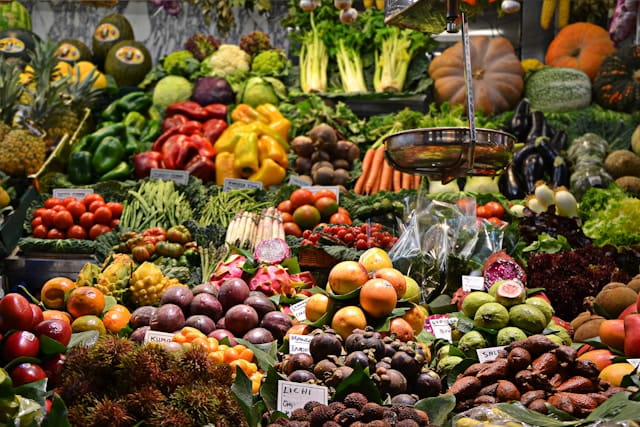
Assortment of fresh vegetables for Spanish vegetables vocabulary lesson

Spanish Vegetables Vocabulary

Start with the most common vegetables, then expand your vocabulary with intermediate and advanced vegetable names.

Beginner (A1)

  • tomato el tomate
  • potato la patata
  • onion la cebolla
  • garlic el ajo
  • carrot la zanahoria
  • lettuce la lechuga
  • pepper el pimiento
  • cucumber el pepino
  • cabbage el repollo
  • corn el maíz

Elementary (A2)

  • broccoli el brócoli
  • mushroom el champiñón
  • spinach la espinaca
  • zucchini el calabacín
  • cauliflower la coliflor
  • green bean las judías verdes
  • pumpkin la calabaza
  • pea el guisante

Intermediate & Advanced (B1-C1)

  • sweet potato el boniato
  • eggplant la berenjena
  • artichoke la alcachofa
  • asparagus el espárrago
  • beetroot la remolacha
  • turnip el nabo
  • radish el rábano
  • cassava la yuca

Practice What You've Learned

Review your Spanish vegetables vocabulary and test your knowledge with interactive practice.

Ready to take the quiz?

Put your new vegetables vocabulary into practice and see how many words you can remember.

Take the quiz

Practice with flashcards

Review Spanish fruit vocabulary and strengthen your memory with interactive flashcards.

Open flashcards

Example Sentences

In proper context. With highlighted verbs and adjectives.

Beginner & Elementary (A1-A2)

Market interactions between customer and seller using A1/A2 vocabulary.

  • Quiero comprar un tomate fresco. I want to buy a fresh tomato.
  • La patata está muy barata hoy. The potato is very cheap today.
  • Busco una cebolla blanca. I am looking for a white onion.
  • El ajo cuesta dos euros el kilo. Garlic costs two euros a kilo.
  • Necesito una zanahoria grande. I need a large carrot.
  • La lechuga está muy verde. The lettuce is very green.
  • Prefiero un pimiento rojo. I prefer a red pepper.
  • Este pepino es muy jugoso. This cucumber is very juicy.
  • Llevo medio kilo de espinaca. I'm taking half a kilo of spinach.
  • El maíz huele muy bien. The corn smells very good.

Intermediate & Advanced (B1-C1)

More natural market exchanges using B1–C1 vocabulary.

  • Le puedo recomendar esta alcachofa. I can recommend this artichoke to you.
  • Quiero seleccionar el mejor espárrago. I want to select the best asparagus.
  • Esta remolacha está completamente impecable. This beetroot is completely flawless.
  • ¿Puede verificar el origen de esta col lombarda? Can you verify the origin of this red cabbage?
  • Usted puede comprobar la calidad de la col de Bruselas. You can check the quality of the Brussels sprout.
  • Este nabo se nota un poco fibroso. This turnip feels a bit fibrous.
  • Le va a cautivar el sabor de esta acelga. You are going to be captivated by the flavor of this Swiss chard.
  • Busco un rábano con un aroma muy penetrante. I am looking for a radish with a very pungent aroma.
  • Le conviene cocinar bien la yuca. It is advisable for you to cook the cassava well.
  • Voy a descartar esta pieza. I am going to discard this piece.

Frequently Asked Questions

Essential tips on regional vegetable names, market etiquette, weight expressions, and grammar rules.

Vegetable vocabulary varies significantly by region due to local agricultural history and indigenous names. Common regional variations include:

  • Potato: Patata (Spain), Papa (Latin America).
  • Green bean: Judías verdes (Spain), Chauchas (Argentina/Uruguay/Chile), Ejotes (Mexico), Habichuelas (Caribbean/Colombia).
  • Zucchini / Courgette: Calabacín (Spain), Zapallito italiano (South America), Calabacita (Mexico).
  • Pumpkin / Squash: Calabaza (Spain/Mexico), Zapallo (South America), Auyama (Caribbean).
  • Corn: Maíz (Spain/General), Elote (Mexico), Choclo (South America).

In Spanish-speaking markets, vegetables are primarily bought by weight (grams/kilos) or bunches. Common phrases include:

  • Un kilo de... (A kilogram of...)
  • Medio kilo de... (Half a kilo of... / 500g)
  • Un manojo de... (A bunch of... — commonly used for leafy greens or herbs)
  • Una cabeza de... (A head of... — used for garlic, lettuce, or cabbage)
  • Un atado de... (A bundle/bunch of... — used for asparagus or leeks)

To talk about the flavor, texture, aroma, and overall condition of vegetables at the market, use these essential descriptive adjectives:

  • Fresco/a: Fresh (e.g., "Los tomates están muy frescos.")
  • Crujiente: Crunchy / crisp — great for texture (e.g., "El pepino debe estar crujiente.")
  • Tierno/a: Tender — describes soft, young vegetables (e.g., "Estos espárragos están muy tiernos.")
  • Jugoso/a: Juicy (e.g., "Este pimiento es muy jugoso.")
  • Dulce: Sweet — used for natural flavors like root veggies or squash (e.g., "La zanahoria tiene un sabor dulce.")
  • Fibroso/a: Fibrous — describes woody or stringy textures (e.g., "Este nabo se nota un poco fibroso.")
  • Amargo/a: Bitter — for leafy greens or specific roots (e.g., "Algunas acelgas tienen un toque amargo.")
  • Aromático/a: Aromatic — for pungent or fragrant produce (e.g., "El ajo fresco es muy aromático.")

While most vegetables ending in -a are feminine (la cebolla, la zanahoria, la alcachofa) and those ending in -o are masculine (el tomate, el pepino, el pimiento), watch out for common exceptions:

  • El brócoli (Broccoli)
  • El apio (Celery)
  • El nabo (Turnip)
  • El coliflor / La coliflor (Cauliflower — both masculine and feminine are widely accepted depending on the region)

Tip: Words for plant families or specific leafy greens (like la col) form compound names such as la col lombarda or la col de Bruselas, where the gender matches the head noun.

When interacting with vegetable stalls (puestos de verduras), these natural expressions work best:

  • ¿A cuánto está el kilo de...? (How much is a kilo of...?)
  • ¿Me pone un kilo de..., por favor? (Could you give me a kilo of..., please?)
  • ¿Tiene verduras locales o de temporada? (Do you have local or seasonal vegetables?)
  • ¿Están tiernos estos espárragos? (Are these asparagus tender?)

Explore All Spanish Lessons

Browse all Spanish vocabulary lessons, quizzes, grammar guides, and learning resources.

Browse All Lessons

Photo by Jacopo Maiarelli on Unsplash